Alzheimer’s disease – When memory gradually fades over tim
Keywords: Alzheimer’s disease, dementia, memory, brain
Definition
Alzheimer’s disease is a progressive neurodegenerative disorder and the most common cause of dementia. The disease affects memory, thinking ability, and behavior, gradually impairing a person’s ability to perform daily activities. Alzheimer’s occurs when nerve cells in the brain become damaged and gradually die over time, leading to brain atrophy and cognitive decline. The disease typically progresses slowly over many years and eventually severely affects brain function.
Epidemiology
Alzheimer’s disease mainly affects older adults, and the risk increases with age. Most patients begin to develop symptoms after the age of 65, and the likelihood of developing the disease rises significantly with advancing age. Globally, Alzheimer’s disease accounts for approximately 60-70% of all dementia cases. As life expectancy continues to increase worldwide, the number of people living with Alzheimer’s is also rising, making it an important public health concern in many countries.
Pathophysiology
Alzheimer’s disease is associated with abnormal changes in the brain, particularly the accumulation of beta-amyloid plaques and neurofibrillary tangles composed of tau protein. These abnormal structures disrupt communication between neurons and gradually damage them. Over time, neurons lose connections and eventually die, leading to reduced brain volume and declining brain function. The disease process often begins in brain regions responsible for memory and gradually spreads to other areas that control language, reasoning, and behavior.
Clinical symptoms
Symptoms of Alzheimer’s disease usually begin with mild memory impairment, especially difficulty remembering recent events or conversations. As the disease progresses, individuals may experience difficulties with thinking, planning, and problem-solving. Other symptoms include confusion about time and place, difficulty finding the right words during conversations, trouble performing familiar tasks, and changes in personality or behavior. In the later stages, patients may fail to recognize family members, lose the ability to communicate, and require complete assistance with daily activities.
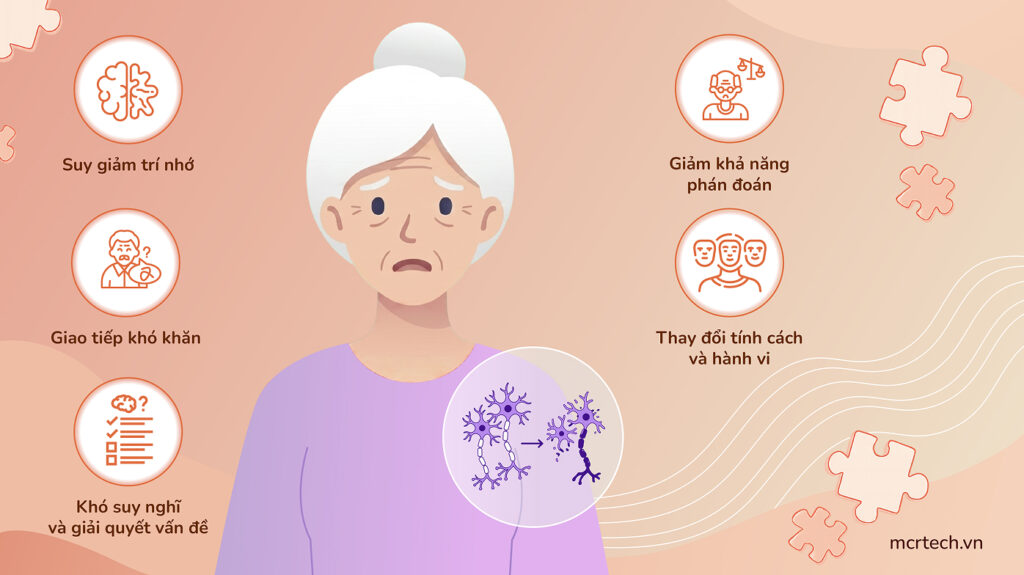
A summary of 5 typical clinical symptoms for early recognition and detection of Alzheimer’s disease.
Risk factors
Age is the most significant risk factor for Alzheimer’s disease. In addition, family history and genetic factors may increase the likelihood of developing the condition. Other factors related to lifestyle and cardiovascular health, such as hypertension, diabetes, obesity, smoking, physical inactivity, and sleep disorders, may also contribute to an increased risk of Alzheimer’s disease. Traumatic brain injury, Down syndrome, and certain environmental factors may also be associated with a higher risk.
Complications
As Alzheimer’s disease progresses, cognitive decline may make it difficult for patients to care for themselves or manage other health conditions. Patients may not recognize symptoms of illness, may fail to follow treatment instructions, or may be unable to communicate pain or discomfort. In the advanced stages, brain changes may affect physical functions such as swallowing, movement, and bladder control, which can lead to complications including pneumonia, malnutrition, dehydration, and falls.
Treatment and disease management
Currently, there is no cure for Alzheimer’s disease. However, certain medications may help improve symptoms or slow cognitive decline for a limited period of time. In addition to pharmacological treatment, comprehensive care plays an important role in disease management. This includes psychological support, maintaining cognitive activities, creating a safe living environment, and providing support from family members or caregivers. Effective management can help patients maintain a better quality of life for a longer period.

A guide to the 4 core elements in comprehensive treatment and management for Alzheimer’s patients.
Prevention and risk reduction
Although there is no guaranteed way to prevent Alzheimer’s disease, many studies suggest that maintaining a healthy lifestyle may help reduce the risk. Recommended measures include regular physical exercise, a balanced and healthy diet, proper management of cardiovascular conditions such as hypertension and diabetes, quitting smoking, and maintaining mental stimulation and social engagement. These habits may help protect brain health and slow cognitive decline as people age.
References:
- Alzheimer’s Association. (n.d.). What is Alzheimer’s?. https://www.alz.org/alzheimers-dementia/what-is-alzheimers
- National Institute on Aging. (2024). Alzheimer’s Disease Fact Sheet.
https://www.nia.nih.gov/health/alzheimers-and-dementia/alzheimers-disease-fact-sheet