A practical approach to the diagnosis and management of gastroesophageal reflux disease
If not appropriately treated, gastroesophageal reflux disease (GERD) may lead to complications such as esophagitis, esophageal stricture, Barrett’s esophagus, and an increased risk of esophageal adenocarcinoma. However, most patients have a favorable prognosis when the disease is diagnosed early and managed properly, particularly with long-term treatment adherence and regular follow-up.
Keywords: Gastric reflux, gastroesophageal reflux disease, GERD, gastrointestinal tract
Definition
Gastroesophageal reflux disease (GERD) is a chronic gastrointestinal disorder characterized by the frequent reflux of gastric contents and acid into the esophagus, resulting in bothersome symptoms and/or esophageal mucosal injury. GERD not only significantly impairs quality of life but may also lead to serious complications if inadequately controlled.

Understanding GERD – Gastroesophageal Reflux Disease
Pathophysiology
The pathophysiology of GERD is multifactorial, with dysfunction of the lower esophageal sphincter (LES) playing a central role. Under normal conditions, the LES maintains sufficient pressure to prevent gastric contents from refluxing into the esophagus. In patients with GERD, LES tone may be reduced, or transient lower esophageal sphincter relaxations (TLESRs) unrelated to swallowing may occur, facilitating acid reflux.
In addition, hiatal hernia, increased intra-abdominal pressure (as seen in obesity or pregnancy), delayed gastric emptying, and impaired esophageal motility contribute to prolonged exposure of the esophageal mucosa to gastric acid. When mucosal defense mechanisms are overwhelmed, acid and pepsin induce inflammation and mucosal damage, leading to the clinical manifestations of GERD.
Clinical manifestations
The most characteristic symptom of GERD is heartburn, commonly described as a burning sensation behind the sternum that worsens after meals, when lying down, or when bending forward. Regurgitation, characterized by the perception of sour or bitter gastric contents rising into the mouth, is also frequently reported. Some patients may experience non-cardiac chest pain, which can be mistaken for cardiac disease.
In addition, GERD may present with atypical or extra-esophageal symptoms, including dysphagia, chronic cough, hoarseness, recurrent pharyngitis, asthma-like symptoms, or dental enamel erosion. These manifestations highlight the broader impact of acid reflux beyond the esophagus.
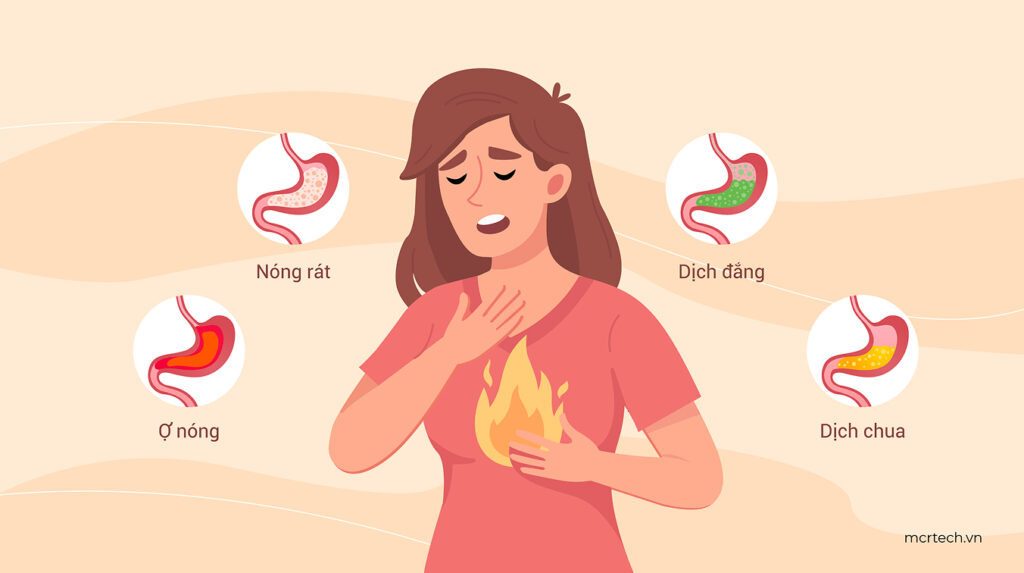
Identifying GERD through typical symptoms
Diagnosis
The diagnosis of GERD is primarily based on clinical evaluation, especially in patients presenting with typical symptoms. In many cases, a therapeutic trial with proton pump inhibitors (PPIs) and assessment of symptom response can serve as a supportive diagnostic approach.
Further diagnostic investigations are indicated in patients with atypical symptoms, poor response to therapy, or alarm features. Upper gastrointestinal endoscopy allows evaluation of esophageal mucosal injury and detection of complications. Twenty-four-hour esophageal pH monitoring is considered the gold standard for quantifying acid reflux, while esophageal manometry is used to assess LES function and esophageal motility. Alarm symptoms such as unexplained weight loss, progressive dysphagia, or gastrointestinal bleeding warrant prompt evaluation.
Treatment
Lifestyle and behavioral modifications:
Lifestyle modification is a cornerstone of GERD management and should be recommended for all patients regardless of disease severity. Weight reduction is particularly important in overweight or obese individuals, as it decreases intra-abdominal pressure and reflux frequency. Patients are advised to avoid large meals, refrain from eating within 3–4 hours before bedtime, and elevate the head of the bed to reduce nocturnal reflux. Additionally, avoidance of factors that reduce LES tone—such as alcohol, tobacco, chocolate, coffee, high-fat foods, and spicy foods—may help alleviate symptoms and reduce reliance on pharmacologic therapy.
Pharmacological treatment
Medical therapy is the mainstay of GERD management, aiming to suppress gastric acid secretion and protect the esophageal mucosa. Antacids neutralize gastric acid and provide rapid symptom relief but offer only short-term benefit and are not suitable for maintenance therapy.
Histamine-2 receptor antagonists (H2 blockers), such as famotidine, reduce gastric acid secretion and are effective in mild to moderate GERD. However, their efficacy is inferior to that of PPIs, and tolerance may develop with prolonged use.
Proton pump inhibitors (PPIs) represent the most effective and first-line pharmacologic treatment for GERD. By irreversibly inhibiting the gastric proton pump in parietal cells, PPIs markedly suppress acid secretion, leading to symptom relief and healing of erosive esophagitis. PPIs are typically prescribed for 4–8 weeks during initial therapy, followed by dose adjustment to the lowest effective maintenance dose. Long-term PPI use should be carefully monitored due to potential adverse effects.
Interventional and surgical treatment
Interventional or surgical therapy is reserved for patients who fail to respond to optimal medical management, develop complications, or prefer to avoid long-term medication use. Nissen fundoplication, a surgical procedure involving wrapping the gastric fundus around the lower esophagus, is the most commonly performed operation and effectively enhances LES function to prevent reflux. Less invasive approaches, such as radiofrequency therapy or magnetic sphincter augmentation, may be considered in selected cases
Long-term management strategy
GERD is a chronic condition, and treatment is generally aimed at long-term symptom control and prevention of complications rather than complete cure. Individualized treatment strategies that combine lifestyle modification with pharmacologic therapy at the lowest effective dose are essential for optimal long-term management of patients with GERD.
References:
- Azer SA, Goosenberg E. Gastroesophageal Reflux Disease (GERD). In: StatPearls [Internet]. Treasure Island (FL): StatPearls Publishing; 2025 Jan–. Bookshelf ID: NBK554462. PMID: 32119349. Available from:
https://www.ncbi.nlm.nih.gov/books/NBK554462/ - Harvard Health Publishing. Gastroesophageal reflux disease (GERD). Harvard Health; Reviewed by Howard E. LeWine, MD; January 21, 2026. Available from:
https://www.health.harvard.edu/a_to_z/gastroesophageal-reflux-disease-gerd-a-to-z