Botulism: A rare but extremely dangerous neurotoxic poisoning
Keywords: Botulism, Clostridium botulinum, botulinum toxin, food poisoning, anaerobic bacteria, muscle paralysis.
Definition
Botulism is a rare but potentially fatal disease caused by a powerful neurotoxin produced by the bacterium Clostridium botulinum. Botulinum toxin is considered one of the most potent biological toxins known. Once it enters the body, the toxin can cause muscle paralysis by disrupting the transmission of signals between nerves and muscles. Botulism can occur in several forms, including foodborne botulism, infant botulism, wound botulism, and inhalational botulism. Although uncommon, the disease can progress rapidly and may lead to severe respiratory failure if not diagnosed and treated promptly.
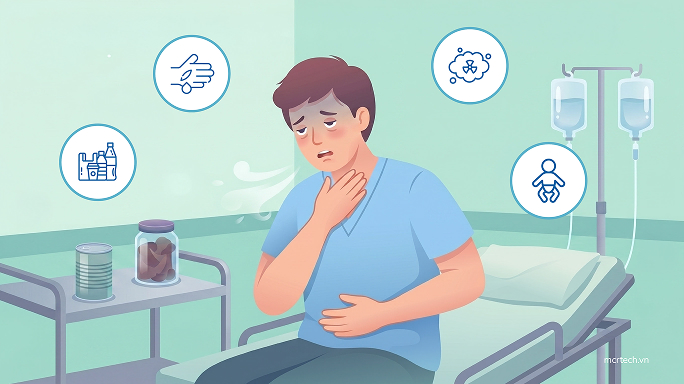
Illustration of the pathogenesis and clinical manifestations of botulism.
Epidemiology
Botulism is a relatively rare disease but remains a significant public health concern due to the high toxicity of botulinum toxin. Cases have been reported in many countries worldwide and are often associated with improperly preserved or processed foods, particularly home-canned products. Epidemiological reports indicate that the mortality rate of botulism has decreased significantly due to improvements in early diagnosis and treatment with antitoxin therapy. However, if untreated, the disease may still result in death in approximately 5–10% of cases. In addition, botulism has received attention in the field of biosecurity because botulinum toxin has the potential to be used as a dangerous biological agent.
Causes and risk factors
The causative agent is Clostridium botulinum, a gram-positive anaerobic bacterium capable of forming spores. These spores can survive for long periods in the environment, including soil, water, and marine sediments. Under favorable conditions, particularly in low-oxygen environments, the spores can germinate into active bacteria that produce botulinum toxin. Common risk factors include consumption of home-canned foods that have not been properly heat-processed, fermented foods stored under inappropriate conditions, and low-acid foods such as vegetables, fish, or meat. In infants, ingestion of honey or exposure to environmental spores may allow the bacteria to grow in the intestines and produce toxins. In addition, wound botulism may occur when bacterial spores enter deep wounds and grow in anaerobic conditions.
Pathophysiology
Botulinum toxin acts directly on the peripheral nervous system by inhibiting the release of acetylcholine at neuromuscular junctions. Acetylcholine is a neurotransmitter essential for transmitting signals from nerves to muscles, allowing muscle contraction. When the toxin blocks this process, muscles cannot receive nerve signals, leading to flaccid paralysis. The paralysis in botulism typically progresses in a descending pattern. Muscles of the head and neck are usually affected first, followed by those of the trunk and limbs. If paralysis spreads to the respiratory muscles, patients may develop severe respiratory failure, which is the primary cause of death in botulism.
Clinical manifestations
Symptoms of botulism typically appear within 12–36 hours after exposure to the toxin, although the onset may vary from a few hours to several days. Early symptoms often include fatigue, muscle weakness, dizziness, and visual disturbances such as blurred vision or double vision. Patients may also experience drooping eyelids, difficulty speaking, difficulty swallowing, and dry mouth. As the disease progresses, muscle weakness becomes more pronounced and may spread to the neck, shoulders, arms, and legs. In severe cases, patients may experience difficulty breathing due to paralysis of the respiratory muscles. Some individuals may also develop gastrointestinal symptoms such as nausea, vomiting, abdominal pain, or diarrhea, particularly in foodborne botulism.
Diagnosis
The diagnosis of botulism is primarily based on characteristic clinical manifestations combined with a history of exposure to potential sources, such as consumption of suspected contaminated food. Laboratory tests can be used to confirm the diagnosis, including the detection of botulinum toxin in blood, stool, or suspected food samples. In some cases, Clostridium botulinum may be isolated from stool or wound specimens. Additionally, electromyography may help support the diagnosis by detecting abnormalities in neuromuscular transmission.
Treatment
Treatment of botulism should be initiated as early as possible to limit the effects of the toxin on the nervous system. The main treatment is administration of botulinum antitoxin, which neutralizes circulating toxin in the body and prevents further disease progression. However, antitoxin cannot reverse nerve damage that has already occurred, making early treatment particularly important.
In severe cases, patients may require intensive care, including mechanical ventilation to support breathing until neuromuscular function recovers. For wound botulism, wound debridement and appropriate antibiotic therapy may also be indicated.
Prevention
Prevention of botulism primarily relies on safe food handling practices and proper food preservation techniques. Important preventive measures include adequate heat processing of home-canned foods, avoiding consumption of food products that are swollen, leaking, or spoiled, and storing foods at appropriate temperatures.
In addition, infants under one year of age should not be given honey because it may contain spores of Clostridium botulinum. Adherence to food safety guidelines and increased public awareness can significantly reduce the risk of botulism.

Preventive measures against botulism.
References:
- World Health Organization. (2023, September 25). Botulism. https://www.who.int/news-room/fact-sheets/detail/botulism
- Mayo Clinic. (2026, February 13). Botulism – Symptoms and causes. https://www.mayoclinic.org/diseases-conditions/botulism/symptoms-causes/syc-20370262