Can air conditioning increase the risk of respiratory problems?
Keywords: Air conditioning and sore throat, dry throat from air conditioning, nasal congestion caused by air conditioning, dry airways, cold air and respiratory irritation
How does air conditioning affect the nose and throat?
The upper respiratory tract, including the nose, sinuses, and throat helps warm, humidify, and filter the air before it reaches the lungs. Under normal conditions, the lining of the airways produces mucus to keep the area moist, trap dust and irritants, and support the tiny hair-like structures that help clear unwanted particles out of the respiratory tract. However, staying in an air-conditioned room for long periods, especially when the temperature is set too low or the room is poorly ventilated, can make the air drier than what the body finds comfortable. Low humidity may dry out the lining of the nose and throat, leading to irritation, itchiness, discomfort, dry throat, or a dry cough. At the same time, dry and cold air can also irritate the nasal lining, making the nose feel blocked, dry, or slightly more runny. In people with allergies, non-allergic rhinitis, or sensitive airways, these symptoms may be more noticeable – especially if the air conditioner filter is dirty, there is dust or mold in the room, or cold air blows directly onto the face for long periods.
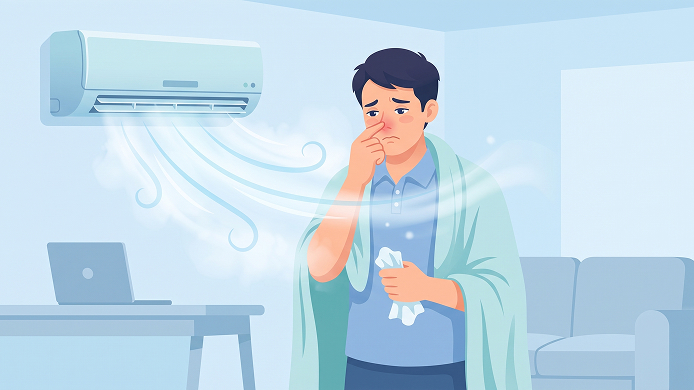
Illustration of the effects of air conditioning on the nasal and pharyngeal mucosa.
Who is more likely to be affected by air conditioning?
Not everyone develops respiratory discomfort in air-conditioned environments, but some groups may be more sensitive than others. People with allergic rhinitis, sinusitis, asthma, chronic nasal dryness, recurrent sore throat, or sensitivity to dust and cold air are more likely to notice symptoms when spending long hours in air-conditioned spaces. Young children and older adults also deserve extra attention, as the lining of their airways may be more sensitive to dry and cool air. In addition, people who work in closed office environments, spend many hours a day under air conditioning, drink too little water, do not get enough sleep, or already have nasal congestion may be more prone to dry throat, nasal discomfort, and dry cough.
Can air conditioning cause sinus infections or sore throat?
Air conditioning is not a direct cause of sinus infections or infectious sore throat, as these conditions are usually linked to viruses, bacteria, or underlying issues such as allergies. However, an air-conditioned environment can make existing symptoms more noticeable, especially in people who already have allergic rhinitis, nasal congestion, or a tendency to breathe through their mouth during sleep. In addition, if the air conditioner is not cleaned regularly, dust and mold trapped in the filter may act as respiratory irritants, triggering throat discomfort, nasal irritation, or allergy flare-ups. In other words, air conditioning does not directly cause infection, but it can contribute to worsening discomfort in the nose and throat when used improperly or in a poorly maintained environment.
Signs that air conditioning may be affecting your airways
Common signs that your airways may be irritated by air conditioning include waking up with a dry throat, mild throat irritation, nasal congestion or dryness, needing to drink water frequently, dry cough, slight hoarseness, or sinus discomfort. Some people may also notice dry lips, dry skin, dry eyes, or even an increased tendency to have nosebleeds if the room air is too dry. If these symptoms mainly occur after spending long hours in an air-conditioned room and improve once you leave the room, increase humidity, drink water, or get some rest, they are more likely to be related to dry or cold air rather than an infection. On the other hand, if your sore throat becomes worse, you develop a fever, feel very fatigued, experience body aches, have thick nasal discharge, or your cough worsens, you should consider the possibility of an actual illness rather than assuming air conditioning is the only cause.
How can you use air conditioning without irritating your airways?
If you often experience dry throat or nasal congestion when using air conditioning, there are several simple steps you can take to reduce irritation. First, avoid setting the temperature too low for long periods, as a large temperature gap between indoors and outdoors may make it harder for the body to adapt. It is also important to drink enough water throughout the day, since proper hydration helps the lining of the nose and throat stay moist. If your nose or throat tends to feel dry, you may consider using a saline nasal rinse or saline spray to keep the nasal lining moist. For people who develop throat irritation from dryness, gargling with warm salt water or drinking warm fluids may also provide relief.

Measures for safe air conditioner use to protect respiratory health.
Is a humidifier helpful when sleeping in an air-conditioned room?
A humidifier can be helpful if the air in your room is too dry and you often wake up with a dry nose, dry throat, or airway discomfort. It may help relieve problems caused by dry air, such as sinus dryness, nasal dryness, or throat irritation. However, humidity should not be too high, as an overly humid environment can encourage the growth of mold, bacteria, and dust mites, which may worsen allergies or asthma. Indoor humidity is generally recommended to stay within the range of 30% to 50%. Just as importantly, humidifiers should be cleaned regularly, the water should be changed often, and standing water should not be left in the device for too long.