Hand, foot, and mouth disease: Home care and when to see a doctor
Keywords: Hand, foot, and mouth disease, HFMD, enterovirus, Coxsackievirus
What is hand, foot, and mouth disease?
Hand, foot, and mouth disease (HFMD) is a common viral infection that primarily affects children under the age of five, although older children and adults can also become infected. The disease is most often caused by viruses from the enterovirus group, with Coxsackievirus A16 being one of the most common causes. HFMD spreads easily within households, childcare centers, and schools through close contact with infected individuals or contaminated surfaces. Most cases are mild and resolve on their own within 7-10 days.
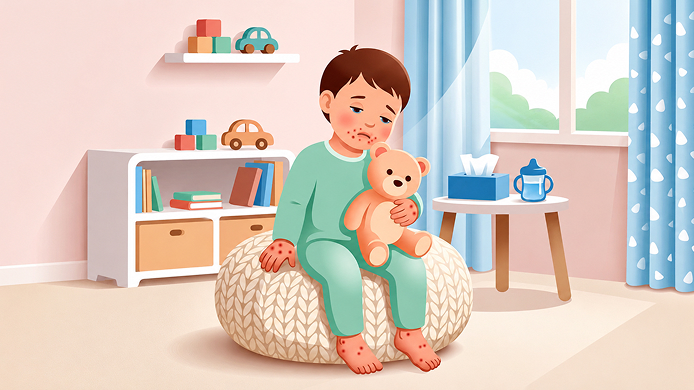
Illustration of the common clinical manifestations of hand, foot, and mouth disease (HFMD).
How does hand, foot, and mouth disease spread?
The viruses that cause HFMD can spread from person to person through saliva, nasal and throat secretions, fluid from blisters, stool, or respiratory droplets produced when an infected person coughs or sneezes. Children can also become infected by touching contaminated toys, doorknobs, or other surfaces and then touching their eyes, nose, or mouth. People with HFMD are usually most contagious during the first week of illness, but the virus can remain in the body for several weeks after symptoms have resolved, especially in the stool. This means that individuals may still spread the virus even after they appear to have recovered or if they have only mild or no symptoms. HFMD is not related to foot-and-mouth disease in livestock and cannot be transmitted from animals to humans.
Symptoms of hand, foot, and mouth disease
Symptoms typically appear 3-6 days after exposure to the virus. Early symptoms often include fever, sore throat, fatigue, poor appetite, and irritability in young children. One or two days later, painful sores usually develop inside the mouth, affecting the tongue, gums, or inner cheeks, making eating and drinking uncomfortable. A skin rash or small blisters commonly appear on the palms of the hands and soles of the feet, and may also develop on the buttocks, knees, or elbows. Depending on the virus strain and the individual, children may experience all or only some of these symptoms.
Who is most at risk?
HFMD is most common in children younger than five years of age, especially those attending daycare centers or preschool, where close contact and limited hygiene practices facilitate the spread of the virus. However, the disease is not limited to young children. Older children, adolescents, and adults can also become infected if they have not previously been exposed to the virus or if they encounter a different strain. Adults may sometimes have very mild symptoms – or none at all – while still being able to transmit the virus to others.
Treatment and when to see a doctor
There is currently no specific antiviral treatment for HFMD. Most children can be cared for at home with adequate rest, plenty of fluids, and soft, cool foods to reduce discomfort from mouth sores. Fever and pain can be managed with appropriate medications as recommended by a healthcare provider. Because mouth ulcers can make swallowing painful, it is important to monitor fluid intake closely to prevent dehydration.
Parents should seek medical evaluation if their child is younger than six months, has a weakened immune system, has a fever lasting more than three days, refuses to drink because of severe mouth pain, or if symptoms do not improve after 7-10 days. Immediate medical attention is needed if the child becomes unusually drowsy, is difficult to wake, startles repeatedly, develops seizures, breathes rapidly, vomits repeatedly, or shows signs of dehydration such as dry lips, reduced urination, or sunken eyes. These symptoms may indicate serious complications that require prompt treatment.
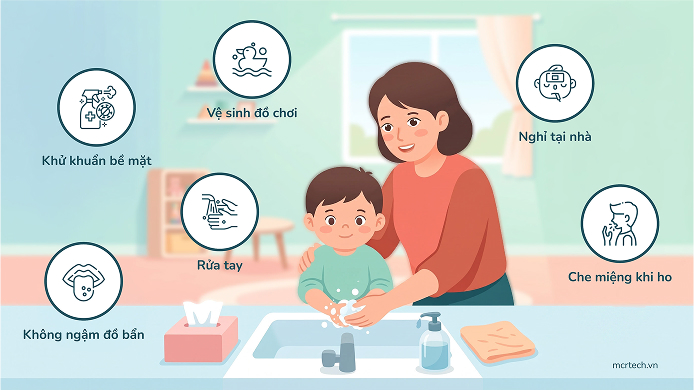
Supportive care and preventive measures for hand, foot, and mouth disease (HFMD).
Can hand, foot, and mouth disease be prevented?
There is currently no widely available vaccine against HFMD in many countries, making good hygiene the most effective way to reduce the risk of infection. Parents and caregivers should wash their hands frequently with soap and water, especially after changing diapers, using the toilet, or preparing food. Toys, tables, doorknobs, and other frequently touched surfaces should be cleaned and disinfected regularly. Children with HFMD should stay home from school or daycare and avoid close contact with others until they are well enough to return, following the advice of their healthcare provider. In addition, children should be encouraged to cover their mouth and nose when coughing or sneezing and to avoid putting unwashed hands or objects into their mouth.
References:
- Mayo Clinic. (2025, December 16). Hand-foot-and-mouth disease. https://www.mayoclinic.org/diseases-conditions/hand-foot-and-mouth-disease/symptoms-causes/syc-20353035
- Centers for Disease Control and Prevention (CDC). (2024, May 7). About Hand, Foot, and Mouth Disease. https://www.cdc.gov/hand-foot-mouth/about/index.html