Celebrating women’s month: Paying greater attention to the health of half the world
March each year carries a special meaning as people around the world take time to recognize and celebrate the contributions of women to families, communities, and the progress of society. This period is closely associated with International Women’s Day on March 8, a global occasion that acknowledges the roles, achievements, and rights of women. However, beyond flowers and warm wishes, women’s month also serves as an important reminder of a critical issue that is sometimes overlooked: women’s health.
In reality, women’s health is a field with many unique biological and medical characteristics. Throughout life, a woman’s body undergoes multiple hormonal and physiological transitions, from puberty and the reproductive years to pregnancy, postpartum recovery, perimenopause, and menopause. Each of these stages brings different healthcare needs. Hormonal changes, particularly involving estrogen and progesterone, influence not only the reproductive system but also cardiovascular health, bone density, metabolism, and mental well-being. Understanding these changes allows women to be more proactive in monitoring and protecting their health. Alongside natural physiological changes, women also face higher risks of certain health conditions. Among the most common are breast cancer and cervical cancer. Early screening plays a crucial role in detecting these diseases at an early stage, when treatment outcomes are significantly better. Screening methods such as mammography for breast cancer, as well as Pap smear and HPV testing for cervical cancer, have been shown to substantially reduce mortality rates associated with these conditions. Nevertheless, in many developing countries, regular gynecological check-ups and cancer screening are still not common practice, leading to late diagnoses when the disease has already progressed.
Beyond cancer, several other health issues frequently affect women during their reproductive years. One of the most common is polycystic ovary syndrome (PCOS), a hormonal disorder that can lead to irregular menstrual cycles, fertility difficulties, and an increased risk of metabolic diseases such as type 2 diabetes. Later in life, particularly after menopause when estrogen levels decline significantly, women face a higher risk of osteoporosis, a condition characterized by reduced bone density and an increased risk of fractures. These examples highlight the importance of continuous and comprehensive healthcare for women throughout their entire lifespan. Women’s health extends beyond physical conditions and also includes mental well-being. In modern society, many women must balance professional responsibilities, family duties, and social expectations, which can create considerable pressure. Studies indicate that women are more likely than men to experience anxiety disorders and depression. However, mental health issues are often underestimated or dismissed as temporary stress or fatigue from daily life. Another notable reality is that women often act as the primary caregivers within families. They frequently encourage their children, partners, and elderly relatives to seek medical care, receive vaccinations, or adopt healthier lifestyles. Yet ironically, they may postpone taking care of their own health. Many women only visit healthcare facilities when symptoms become severe, even though numerous diseases could be prevented or detected earlier through routine health examinations.
For this reason, women’s month is not only a time for appreciation but also an opportunity to emphasize the importance of prioritizing women’s health. Small lifestyle changes can have long-term benefits, such as maintaining a balanced diet, engaging in regular physical activity, getting adequate sleep, and managing stress effectively. In addition, routine medical check-ups, cancer screening, and monitoring key health indicators play an essential role in disease prevention. When women are healthy, the benefits extend far beyond individuals. Women’s health is closely connected to the well-being of families, the development of future generations, and the stability of communities. Therefore, March should not only be a time for kind words and celebration but also a moment to encourage women to pay greater attention to their own health. After all, investing in women’s health is one of the most meaningful ways to build a healthier and more sustainable society for everyone!
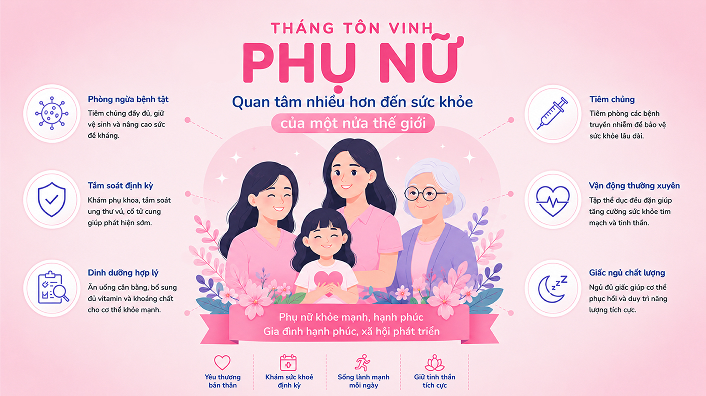
Key health promotion measures to improve women’s health and quality of life.