Breast cancer: Signs, risk factors, and the importance of early detection
Breast cancer is a serious disease but can be effectively managed if detected early and treated promptly. Raising public awareness about warning signs, risk factors, and the importance of breast cancer screening plays a crucial role in reducing the burden of the disease. Paying attention to breast health not only helps protect women’s health but also contributes to improving overall quality of life and the well-being of society.
Keywords: Cancer, breast cancer, women’s health, cancer screening
Overview of the disease
Breast cancer is one of the most common cancers among women worldwide and remains a leading cause of cancer-related death in females. According to the WHO, millions of new cases are diagnosed each year, and the disease can occur in women of all countries and across all age groups after puberty, although the risk increases significantly with age. Breast cancer develops when cells in breast tissue grow abnormally and multiply uncontrollably, forming tumors. Most breast cancers originate from cells in the milk ducts or the lobules of the breast, which are responsible for producing and transporting milk. If not detected and treated early, cancer cells may invade surrounding tissues and spread to lymph nodes or other organs through the circulatory and lymphatic systems, a process known as metastasis.
Signs and symptoms
In its early stages, breast cancer may not cause noticeable symptoms, which is why many cases are only detected when the disease has already progressed. However, certain changes in the breast can serve as warning signs. Women may notice a lump or thickened area in the breast or underarm, changes in the size or shape of the breast, or alterations in the skin such as dimpling, puckering, or a texture resembling an orange peel. Abnormal changes in the nipple, including nipple inversion, distortion, or unusual discharge – sometimes containing blood – may also occur. In some cases, the skin around the breast may become red, scaly, or discolored. It is important to note that many breast lumps are painless; therefore, any unusual lump or change should be evaluated by a healthcare professional to determine its cause.
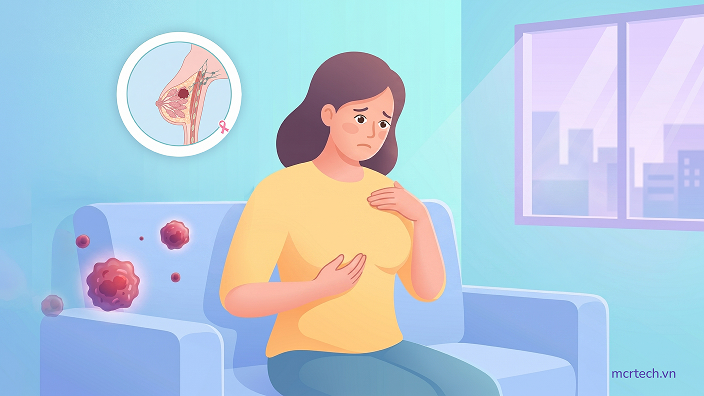
Illustration of the signs and symptoms suggestive of breast cancer.
Risk factors
The exact cause of breast cancer is not fully understood, but scientists believe that the disease results from a combination of genetic, hormonal, and environmental factors. Several factors may increase the risk of developing breast cancer, including being female, older age, a family history of breast cancer, or inherited genetic mutations such as BRCA1 and BRCA2. Lifestyle-related factors can also contribute to increased risk, including overweight or obesity, alcohol consumption, lack of physical activity, and previous exposure to radiation in the chest area. Long-term use of hormone therapy after menopause may also increase the likelihood of developing the disease. However, it is important to note that a significant proportion of breast cancer cases occur in women who have no clear risk factors other than age and gender, indicating that the disease can affect almost any woman.
The role of early detection
Early detection plays a critical role in improving prognosis and treatment outcomes for breast cancer. When the disease is diagnosed at an early stage, the chances of successful treatment and long-term survival are significantly higher compared with cases detected after the cancer has spread. For this reason, medical experts recommend that women undergo regular breast examinations and participate in screening programs such as mammography or breast ultrasound. In addition, being aware of changes in one’s own breast during daily activities can help women recognize abnormalities early and seek timely medical consultation.
Prevention and risk reduction
Although breast cancer cannot always be completely prevented, maintaining a healthy lifestyle can help reduce the risk of developing the disease. Measures such as maintaining a healthy body weight, engaging in regular physical activity, limiting alcohol consumption, and following a balanced diet are considered important for overall health. Furthermore, women should attend regular health check-ups and follow their physicians’ screening recommendations to detect potential abnormalities at an early stage.

Preventive measures to reduce the risk of breast cancer.
References:
- World Health Organization. (2025, August 14). Breast cancer. WHO. https://www.who.int/news-room/fact-sheets/detail/breast-cancer
- Mayo Clinic. (2025, July 26). Breast cancer – Symptoms and causes. Mayo Clinic. https://www.mayoclinic.org/diseases-conditions/breast-cancer/symptoms-causes/syc-20352470