Don’t mistake sinusitis for a common cold: Everything you need to know about sinusitis
Keywords: Sinusitis, sinus infection, respiratory disease, acute sinusitis, chronic sinusitis
What is sinusitis?
Sinusitis, also known as a sinus infection, is a condition in which the lining of the sinuses becomes inflamed and swollen. The sinuses are hollow spaces located in the forehead, cheekbones, and around the nose. Under normal conditions, they contain air and produce mucus that helps keep the nasal passages moist and clean. When the sinus lining becomes irritated by viruses, bacteria, allergies, or other triggers, the drainage pathways can become blocked, causing mucus to build up inside the sinuses. This can lead to facial pain or pressure, nasal congestion, a runny nose, and a heavy feeling in the face. In many medical sources, the term rhinosinusitis is also used because sinus inflammation often occurs together with inflammation of the nasal lining.
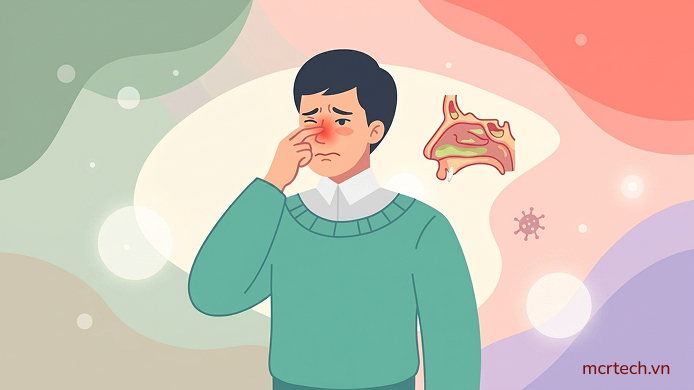
Illustration of the inflammatory process and clinical manifestations of sinusitis.
How sinusitis develops and what causes it
The sinuses are small hollow cavities in the skull located around the forehead, cheeks, and nose, and they connect to the nasal cavity through tiny openings. Normally, the sinus lining produces just enough mucus to keep the area moist while helping clear away dust, bacteria, allergens, and other irritants. However, when the lining of the nose and sinuses becomes inflamed or swollen, these drainage pathways may become blocked. As a result, mucus can become trapped inside the sinuses, leading to congestion, facial pressure, and a higher risk of infection. Most cases of sinusitis begin after a cold or the flu caused by a virus, but bacteria can also be responsible or may develop as a secondary infection after a viral illness. In addition, nasal allergies, smoke, dust, pollen, nasal polyps, structural abnormalities in the nose or sinuses, and in rare cases fungal infections may also contribute to sinusitis. In other words, sinusitis is not simply an infection—it can also result from inflammation, allergies, or mechanical blockage that prevents normal sinus drainage.
Types of sinusitis
Sinusitis can be classified based on how long it lasts or what causes it. In terms of duration, acute sinusitis usually lasts less than four weeks, subacute sinusitis lasts between four and twelve weeks, and chronic sinusitis lasts for twelve weeks or longer. Recurrent sinusitis refers to repeated episodes of acute sinusitis occurring several times within a year. In terms of cause, sinusitis may be linked to viruses, bacteria, fungi, or allergies. Distinguishing between acute and chronic sinusitis is important in clinical practice because the treatment approach, follow-up, and evaluation of underlying conditions such as allergies, nasal polyps, or structural nasal problems may differ.
Common symptoms of sinusitis
Typical symptoms of sinusitis include pain or pressure in the forehead, cheeks, or around the eyes, nasal congestion, a runny nose, reduced sense of smell, thick yellow or green nasal discharge, and a heavy feeling in the face that may worsen when bending forward. In addition, some people may experience headaches, tooth pain, bad breath, cough, ear pressure, fever, and fatigue. Nasal blockage can also cause a stuffy-sounding voice or increased snoring during sleep. In young children, sinusitis may sometimes present as irritability, feeding difficulties, or mouth breathing. However, not everyone will experience all of these symptoms, and the severity can vary from person to person.
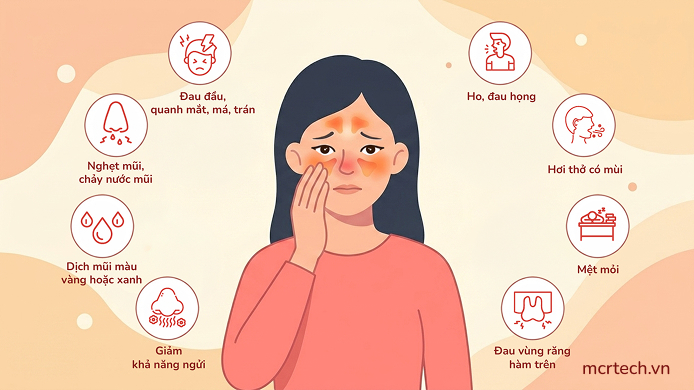
Illustration of the typical clinical manifestations of sinusitis, including facial pain, nasal congestion, and rhinorrhea.
Who is more likely to get sinusitis?
Certain factors can increase the risk of developing sinusitis or make it more persistent. These include nasal allergies, asthma, nasal polyps, a deviated septum, smoking, and a weakened immune system. When the structures inside the nose are narrow or misshapen, sinus drainage becomes less effective, making it easier for mucus to build up. Similarly, cigarette smoke and airborne irritants can trigger chronic inflammation of the nasal and sinus lining. People with weakened immune systems may also have a reduced ability to fight off bacteria or fungi, which can make sinusitis more severe or more likely to recur.
Is sinusitis contagious?
Sinusitis itself is not always contagious, but the viruses or bacteria that cause it can spread from person to person, especially when sinusitis develops after a cold or the flu. In other words, you do not directly “catch sinusitis” from someone else, but you may catch the respiratory infection that can later lead to sinus inflammation. Washing your hands regularly, covering your mouth and nose when coughing or sneezing, and avoiding close contact with others while you have respiratory symptoms are still important steps to reduce the spread of infection.
Treatment and when to see a doctor
Most mild cases of sinusitis can be managed at home by getting plenty of rest, drinking enough fluids, avoiding cigarette smoke and other irritants, and using pain relievers such as paracetamol or ibuprofen when needed. Saline nasal rinses or saline sprays can also be helpful for clearing mucus, easing congestion, and supporting sinus drainage. If sinusitis is linked to allergies, controlling the allergy is also important to reduce the risk of recurrence. However, if symptoms last for a long time, do not improve, recur frequently, or suggest a bacterial infection, a doctor may consider treatments such as steroid nasal sprays, antihistamines, or decongestants. Antibiotics are not always necessary because most cases of sinusitis are caused by viruses and will not respond to antibiotics. In chronic sinusitis, doctors may also look for underlying causes such as nasal polyps, allergies, structural abnormalities, or fungal infection. In some cases, patients may be referred to an ear, nose, and throat specialist for nasal endoscopy, CT imaging, or surgery to improve sinus drainage. Medical attention is especially important if symptoms do not improve after self-care, last for several weeks, or continue with persistent congestion, facial pain, or nasal discharge. Emergency care is needed right away if warning signs such as high fever, confusion, seizures, neck stiffness, blurred vision, or swelling and pain around the eyes develop, as these may suggest a serious complication.
Can sinusitis be prevented?
Sinusitis cannot always be prevented completely, but there are several ways to lower the risk. Washing your hands regularly, avoiding close contact with people who have respiratory infections, managing allergies well, and staying away from cigarette smoke and other airway irritants can all help. For people who frequently experience nasal congestion or allergic rhinitis, doctors may recommend steroid nasal sprays or saline rinses to keep the nasal passages and sinuses clear. If you smoke, quitting smoking is also an important step in reducing the risk of recurrent sinusitis and improving overall respiratory health.
References:
- Cleveland Clinic. (2023, September 3). Sinus Infection (Sinusitis). https://my.clevelandclinic.org/health/diseases/17701-sinusitis
- NHS. (2024, January 31). Sinusitis (sinus infection). https://www.nhs.uk/conditions/sinusitis-sinus-infection/