Early recognition and management of acute otitis media in clinical practice
Acute otitis media (AOM) is a common infectious disease, particularly in children, and is closely associated with Eustachian tube dysfunction and upper respiratory tract infections. The disease is characterized by ear pain, fever, and hearing impairment, and may lead to serious complications if not diagnosed and treated promptly. Preventive measures, including risk factor control and vaccination, play an important role in reducing disease incidence and recurrence.
Keywords: Acute otitis media, upper respiratory tract infection, Streptococcus pneumoniae
Overview of acute otitis media
Acute otitis media is an acute inflammatory and infectious condition of the middle ear cavity, characterized by the presence of inflammatory effusion accompanied by local and systemic symptoms. It is one of the most common otorhinolaryngological diseases, especially in children, but it also carries significant clinical relevance in adults.
According to global epidemiological estimates, acute otitis media accounts for a substantial proportion of upper respiratory tract infections, with hundreds of millions of new cases reported annually. In developing countries, acute otitis media and its complications remain a major cause of hearing impairment and contribute significantly to the healthcare burden.
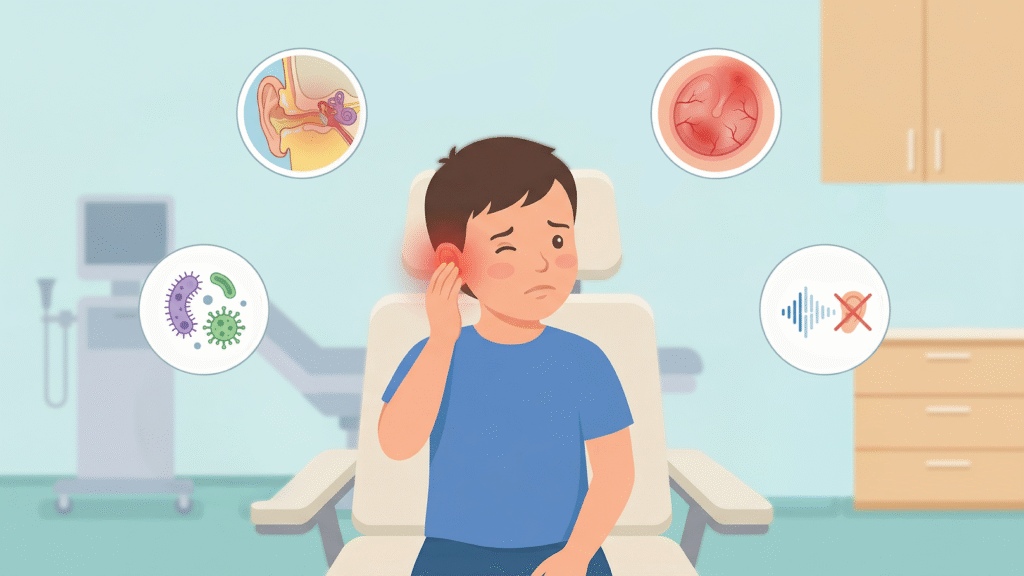
Viêm tai giữa, biến chứng và dấu hiệu nhận biết
Pathogenesis and risk factors
The pathogenesis of acute otitis media is primarily related to dysfunction of the Eustachian tube, which often occurs following an upper respiratory tract infection. Inflammation of the nasopharyngeal mucosa leads to obstruction of the Eustachian tube, resulting in impaired ventilation of the middle ear and accumulation of fluid. This effusion provides a favorable environment for the invasion and proliferation of bacteria or viruses, leading to acute inflammation of the middle ear.
In children, the Eustachian tube is shorter, wider, and more horizontally oriented than in adults, increasing susceptibility to infection. Other risk factors include rhinosinusitis, adenoid hypertrophy, allergic conditions, passive smoking, immunodeficiency, and crowded living environments.
Clinical features of acute otitis media
Acute otitis media typically has a sudden onset, with ear pain being the most prominent symptom. The severity of pain may range from mild discomfort to severe pain and often worsens when lying down. Patients may experience a sensation of ear fullness and temporary hearing loss due to the accumulation of fluid in the middle ear. Fever, fatigue, and general malaise are common, particularly in young children.
If tympanic membrane perforation occurs, purulent otorrhea may be observed. Otoscopic examination usually reveals a hyperemic, bulging tympanic membrane with obscured anatomical landmarks and reduced or absent mobility on pneumatic otoscopy.
Diagnosis of acute otitis media
The diagnosis of acute otitis media is primarily clinical, based on a combination of symptoms and otoscopic findings. The presence of middle ear effusion together with signs of acute inflammation of the tympanic membrane is a key diagnostic criterion. Otoscopy, particularly pneumatic otoscopy, is useful for assessing tympanic membrane mobility and confirming the presence of effusion.
In atypical cases, recurrent disease, or when complications are suspected, adjunctive investigations such as tympanometry or culture of middle ear fluid may be indicated to support diagnosis and guide treatment.
Management of acute otitis media
The main goals of treatment are pain relief, infection control, and prevention of complications. Symptomatic treatment, especially analgesia with paracetamol or nonsteroidal anti-inflammatory drugs, plays a crucial role in the acute phase. Systemic antibiotics are generally indicated in patients with clear signs of bacterial infection, those at high risk of complications, or when symptoms fail to improve after a short period of observation. Amoxicillin is considered the first-line antibiotic, while amoxicillin–clavulanate is recommended when infection with β-lactamase–producing organisms is suspected. Treatment should be individualized based on patient age, disease severity, and underlying comorbidities.
Complications of acute otitis media
If not treated promptly or adequately, acute otitis media may lead to several serious complications. The most common complication is chronic otitis media, characterized by persistent otorrhea and hearing loss. Other potential complications include mastoiditis, facial nerve palsy, and rare but severe intracranial complications such as meningitis and brain abscess. These complications highlight the importance of early diagnosis and close monitoring during treatment.
Research findings and clinical practice in Vietnam
Studies conducted in Vietnam indicate that acute otitis media and recurrent forms of the disease are closely associated with upper airway conditions such as rhinosinusitis, adenoid hypertrophy, and allergic predisposition, particularly in young children.
A high proportion of pediatric patients present with accompanying symptoms such as rhinorrhea, pharyngitis, or upper respiratory tract infections, reflecting the close anatomical and physiological relationship between the middle ear and the upper respiratory tract. These findings are clinically relevant for developing effective prevention, treatment, and follow-up strategies for otitis media at the community level.
Prevention of acute otitis media
Prevention of acute otitis media focuses on reducing risk factors associated with Eustachian tube dysfunction and upper respiratory tract infections. Key measures include effective management of nasal and nasopharyngeal conditions such as allergic rhinitis, rhinosinusitis, and adenoid hypertrophy, which are major contributors to Eustachian tube obstruction. Avoidance of tobacco smoke exposure, improvement of living conditions, and maintenance of good environmental hygiene also help reduce disease incidence, particularly in children.
Vaccination plays a crucial role in preventing acute otitis media, especially in pediatric populations. Vaccines such as the pneumococcal conjugate vaccine and influenza vaccine have been shown to significantly reduce the incidence of upper respiratory tract infections and, indirectly, the risk of developing acute otitis media. In adults, particularly the elderly and individuals with chronic comorbidities, annual influenza vaccination also helps prevent secondary episodes of otitis media following viral respiratory infections.

Tiêm chủng đóng vai trò quan trọng trong dự phòng viêm tai giữa cấp
In addition, early diagnosis and adequate treatment of acute otitis media are essential in preventing recurrence and long-term complications. Post-treatment follow-up, especially in high-risk populations, allows early detection of persistent middle ear effusion or recurrent disease. Community health education on recognizing early symptoms such as ear pain, fever, and hearing impairment is an integral component of long-term prevention strategies.
References:
- Cunha, C. B., & Opal, S. M. (2024, June 18). Acute otitis media in adults. In UpToDate. Wolters Kluwer. https://www.uptodate.com/contents/acute-otitis-media-in-adults
- Schilder AG, Chonmaitree T, Cripps AW, Rosenfeld RM, Casselbrant ML, Haggard MP, Venekamp RP. Otitis media. Nat Rev Dis Primers. 2016 Sep 8;2(1):16063. doi: 10.1038/nrdp.2016.63. PMID: 27604644; PMCID: PMC7097351.
- Phú, N. T., & Huy, Đ. V. (2024). Đặc điểm lâm sàng, nguyên nhân và các yếu tố nguy cơ của viêm tai giữa ứ dịch tái diễn ở trẻ em tại Bệnh viện Bệnh Nhiệt đới Trung ương. Tạp chí Truyền nhiễm Việt Nam. Tạp chí của Hội Truyền nhiễm Việt Nam. https://truyennhiemvietnam.vn/index.php/vjid/article/view/373/321