Overview and updates on the treatment of a progressive neurodegenerative disease – Parkinson’s disease
Parkinson’s disease is a progressive neurological disorder characterized by the degeneration of dopamine-producing neurons in the midbrain, leading to motor impairments and a wide range of non-motor symptoms. The disease predominantly affects older adults and has shown a steadily increasing global prevalence, posing a significant burden on individuals and healthcare systems. Diagnosis is primarily based on clinical evaluation, while current treatment strategies focus on symptomatic management through pharmacological therapy, surgical interventions, and rehabilitation measures aimed at improving patients’ quality of life.
Keywords: Parkinson’s disease; neurodegeneration; dopamine; movement disorders; Parkinson’s treatment
Overview of Parkinson’s disease
Parkinson’s disease is a chronic, progressive neurodegenerative disorder that primarily affects motor function while also impacting multiple other physiological systems. The central pathogenic mechanism involves the gradual loss of dopaminergic neurons in the substantia nigra, resulting in dopamine deficiency within the basal ganglia circuitry.
Histopathologically, the presence of Lewy bodies containing abnormal aggregates of alpha-synuclein is a hallmark feature of the disease. Parkinson’s disease is the second most common neurodegenerative disorder after Alzheimer’s disease and predominantly affects older individuals, with prevalence increasing rapidly in parallel with global population aging.
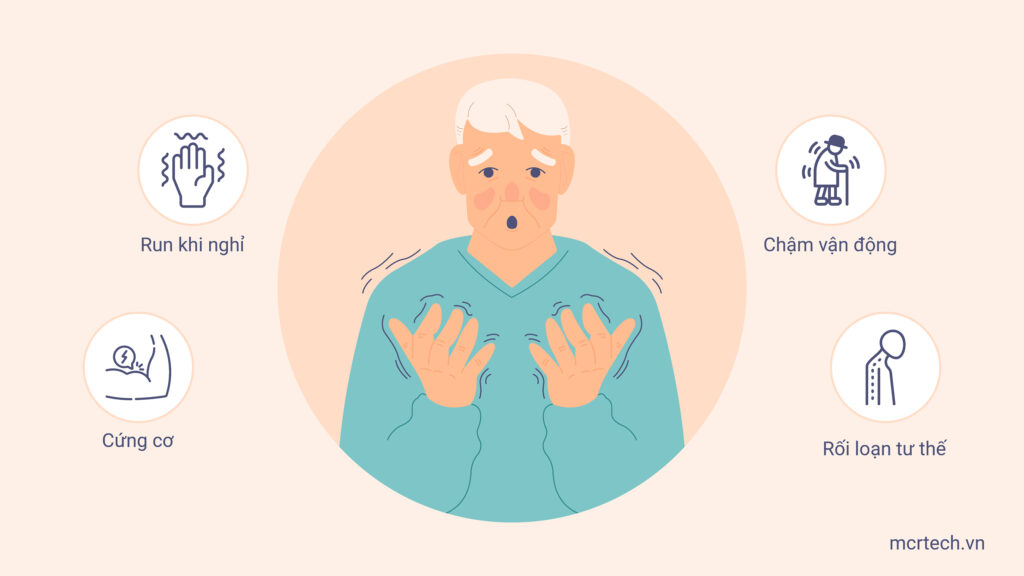
The impact of Parkinson’s disease on those affected.
Clinical manifestations
The clinical presentation of Parkinson’s disease is highly heterogeneous and includes both motor and non-motor symptoms. Cardinal motor features consist of resting tremor, muscular rigidity, bradykinesia, and postural and gait instability, which significantly increase the risk of falls. These symptoms typically develop insidiously and progress gradually over time.
In addition, many patients experience non-motor manifestations such as sleep disturbances, depression, anxiety, cognitive impairment, autonomic dysfunction (including constipation, orthostatic hypotension, and urinary disturbances), as well as speech and swallowing difficulties. Non-motor symptoms may appear early in the disease course and have a profound impact on quality of life.
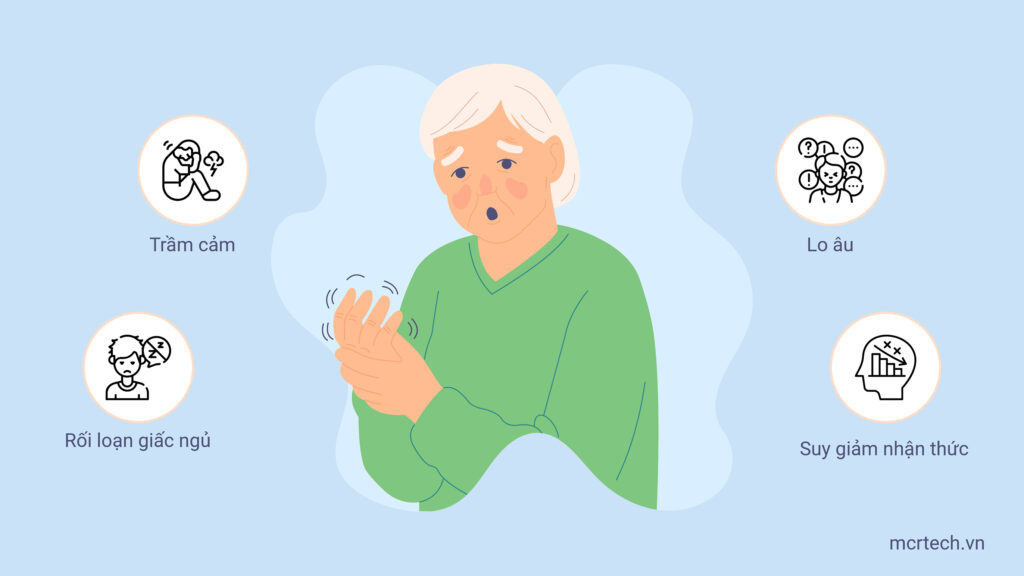
Common symptoms of Parkinson’s disease
Etiology and risk factors
The exact cause of Parkinson’s disease remains unclear. Most cases are considered idiopathic and are believed to result from complex interactions between genetic susceptibility and environmental exposures. Several genetic mutations, including those in SNCA, LRRK2, PRKN, and PINK1, have been identified in familial forms of Parkinson’s disease, although these account for only a small proportion of cases.
Environmental factors such as exposure to pesticides, heavy metals, and air pollution have been associated with an increased risk of disease development. Advanced age is the most significant risk factor, and Parkinson’s disease is more prevalent in men than in women.
Diagnosis of Parkinson’s Disease
The diagnosis of Parkinson’s disease is primarily clinical, based on a detailed medical history and neurological examination demonstrating characteristic motor features. Currently, there are no definitive biological markers available to confirm the diagnosis.
Neuroimaging techniques such as magnetic resonance imaging (MRI) or single-photon emission computed tomography (SPECT) may be used to exclude alternative causes of parkinsonian syndromes but are not diagnostic on their own. Early diagnosis is crucial for timely initiation of treatment and appropriate monitoring of disease progression.
Treatment of Parkinson’s disease
The management of Parkinson’s disease is largely symptomatic, aiming to improve motor function, control non-motor symptoms, and enhance overall quality of life.
Pharmacological therapy remains the cornerstone of treatment, with levodopa in combination with carbidopa considered the most effective option for alleviating motor symptoms. Other drug classes, including dopamine agonists and inhibitors of monoamine oxidase B (MAO-B) and catechol-O-methyltransferase (COMT), are used to enhance or prolong dopaminergic effects, particularly in early disease stages or when motor fluctuations develop. Long-term pharmacotherapy, however, may lead to complications such as dyskinesias and motor fluctuations, necessitating individualized treatment adjustments.
For patients with advanced Parkinson’s disease or inadequate response to medical therapy, deep brain stimulation (DBS) may be considered. This surgical approach modulates abnormal neural activity within motor circuits and can significantly improve symptoms in appropriately selected patients. In addition, non-pharmacological interventions – including physical therapy, speech and language therapy, occupational therapy, psychological support, and nutritional counseling – play a vital role in the comprehensive and long-term management of Parkinson’s disease.
Disease burden and social impact
Parkinson’s disease imposes a substantial health, economic, and social burden due to its progressive nature and the need for long-term care. The global number of individuals living with Parkinson’s disease is increasing rapidly, particularly in aging populations. The disease leads to reduced work capacity, increased healthcare costs, and significant strain on families and caregivers. Disparities in access to pharmacological treatments and rehabilitation services across regions further exacerbate inequalities in Parkinson’s disease care.
Parkinson’s disease is a complex, progressive neurological disorder that profoundly affects motor function and quality of life. Although no curative treatment is currently available, early diagnosis and comprehensive management using pharmacological therapy, surgical interventions, and supportive measures can effectively control symptoms and reduce disease burden. Future research into disease mechanisms and the development of reliable biomarkers holds promise for novel therapeutic strategies and improved prevention of Parkinson’s disease.
References:
- World Health Organization. (2023, August 9). Parkinson disease. WHO.
https://www.who.int/news-room/fact-sheets/detail/parkinson-disease - National Institute of Neurological Disorders and Stroke. (2025). Parkinson’s disease. National Institutes of Health.
https://www.ninds.nih.gov/health-information/disorders/parkinsons-disease