Heat exhaustion and heatstroke: Don’t ignore your body’s warning signs
Keywords: Heat exhaustion, heatstroke, dehydration, seasonal illness
Every year, as summer arrives, the number of hospitalizations due to heat-related illnesses rises significantly. Many people think heat exhaustion is just “tiredness from hot weather” and that resting a bit will make it go away. However, in some cases, this condition can progress to heatstroke – a dangerous medical emergency that can cause brain damage, multiple organ failure, and even death if not treated promptly.
What is heat exhaustion?
Heat exhaustion is a condition where the body loses excessive water and electrolytes due to prolonged exposure to high temperatures. This often happens when:
- Staying outdoors under intense sunlight for too long
- Working in a hot environment
- Exercising at high intensity in hot weather
- Not drinking enough water
When environmental temperatures rise, the body tries to cool itself by sweating. However, if too much water is lost or the body’s thermoregulation system becomes overloaded, warning symptoms begin to appear.
Common signs of heat exhaustion include:
- Dizziness
- Headache
- Nausea
- Heavy sweating
- Fatigue
- Muscle cramps
- Rapid heartbeat
- Intense thirst
Many people ignore these symptoms, thinking rest will be enough. But in reality, this could be the initial stage before heatstroke develops.
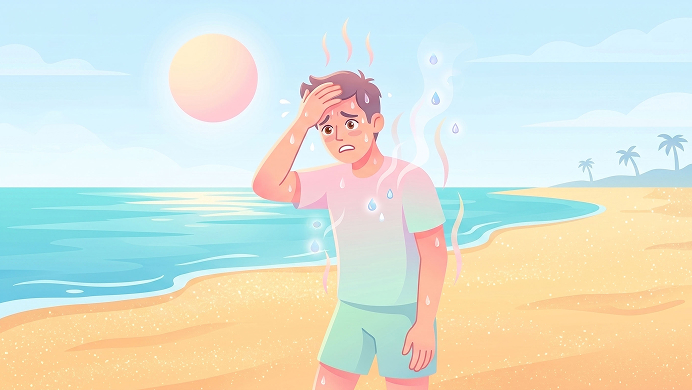
Illustration of the early manifestations of heat-related illness.
How dangerous is heatstroke?
Heatstroke is the most severe form of heat-related illness. It occurs when body temperature rises too high, usually above 40°C, causing the body’s temperature regulation system to fail. Unlike ordinary heat exhaustion, heatstroke can directly damage the brain, heart, liver, kidneys, and muscles. Without rapid emergency treatment, the patient may fall into a coma or die.
A dangerous aspect is that during heatstroke, the body may stop sweating altogether. The skin may become hot, red, and dry, leading some to mistakenly think that not sweating means improvement.
Warning signs of heatstroke requiring immediate emergency care
If after exposure to hot weather someone experiences confusion, slurred speech, seizures, fainting, difficulty breathing, hot and red skin, a very high body temperature, or loss of consciousness, take them to a medical facility immediately.
Heatstroke can occur very quickly, especially in:
- The elderly
- Young children
- People with cardiovascular disease
- Outdoor workers
- Athletes
- People with sleep deprivation or heavy alcohol use
Even healthy young people can suffer heatstroke if they engage in high-intensity activities in extreme weather.
Why does the body become overloaded in hot weather?
The human body functions best when maintaining a temperature around 37°C. In hot weather, blood vessels dilate to release heat, and sweat production increases. Evaporating sweat helps cool the skin. However, if the environment is too hot or humid, or if the person doesn’t drink enough water, this cooling mechanism becomes ineffective.
Notably, the body loses not just water but also electrolytes like sodium and potassium. That’s why many people still feel tired, have headaches, or experience cramps even after drinking plenty of plain water. In such cases, only drinking water is sometimes not enough.
Proper first aid for heat exhaustion
If mild symptoms appear, move the person to a cool place, loosen clothing, give them water or an electrolyte solution, then cool their body with damp cloths and let them rest. Applying cold compresses to the neck, armpits, or groin – areas with large blood vessels – helps lower body temperature faster.
However, if the person shows signs of confusion, repeated vomiting, difficulty breathing, or does not improve within 15–30 minutes, call for emergency help immediately.
A common mistake is trying to force someone with heatstroke to drink water. If the patient is drowsy or has altered consciousness, this can cause choking and be even more dangerous.
How to prevent heat illness
We can prevent heat illness with simple but important measures:
- Drink water regularly; don’t wait until you’re thirsty
- Limit going outside during peak sun hours (10 a.m. – 4 p.m.)
- Wear light, breathable clothing
- Wear a hat and use sunscreen
- Replenish electrolytes if exercising heavily
- Avoid excessive alcohol consumption in hot weather
For people who exercise:
- Avoid exercising outdoors at noon
- Take breaks between sessions
- Monitor for dizziness or cramps
Additionally, a car parked in the sun with windows closed can reach extremely high temperatures within minutes. Never leave children or pets in a car, even for a short time.
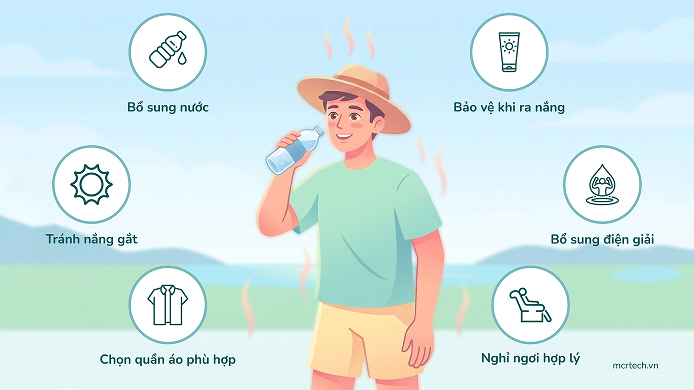
Prevention measures for heat-related illness and heat stroke.
Don't wait until you faint to realize the danger
The scary thing about heatstroke is that many early signs are easily overlooked. People often think, “Just a little dizziness,” “It’s just really hot today,” or “I’ll be fine after resting.” But sometimes, the body is signaling that its temperature regulation system is nearing its limit.
As global temperatures rise and extreme heatwaves become more frequent, understanding heat exhaustion and heatstroke is not just medical knowledge – it’s a life-saving skill. Because sometimes, the most dangerous thing about hot weather isn’t the discomfort… but how accustomed we’ve become to it.