Polycystic ovary syndrome: From endocrine disorder to a comprehensive health challenge in women
Polycystic ovary syndrome (PCOS) is a common endocrine-metabolic disorder affecting women of reproductive age. Beyond its impact on fertility, PCOS significantly increases the risk of metabolic diseases, cardiovascular disorders, and psychological disturbances. Early diagnosis and comprehensive management, combining lifestyle modification with individualized treatment strategies, play a crucial role in improving quality of life and preventing long-term complications in affected women.
Keywords: Polycystic ovary syndrome; PCOS; hyperandrogenism; insulin resistance; ovulatory dysfunction; metabolic disorders
Overview
Polycystic ovary syndrome (PCOS) is a complex and the most prevalent endocrine–metabolic disorder among women of reproductive age. It is characterized by a combination of hyperandrogenism, ovulatory dysfunction, and polycystic ovarian morphology. PCOS not only affects reproductive function but is also closely associated with multiple metabolic and psychological disorders that may persist throughout a woman’s lifespan. With a prevalence ranging from 6% to 20% depending on diagnostic criteria, PCOS is now recognized as a global public health concern requiring long-term, multidisciplinary management.
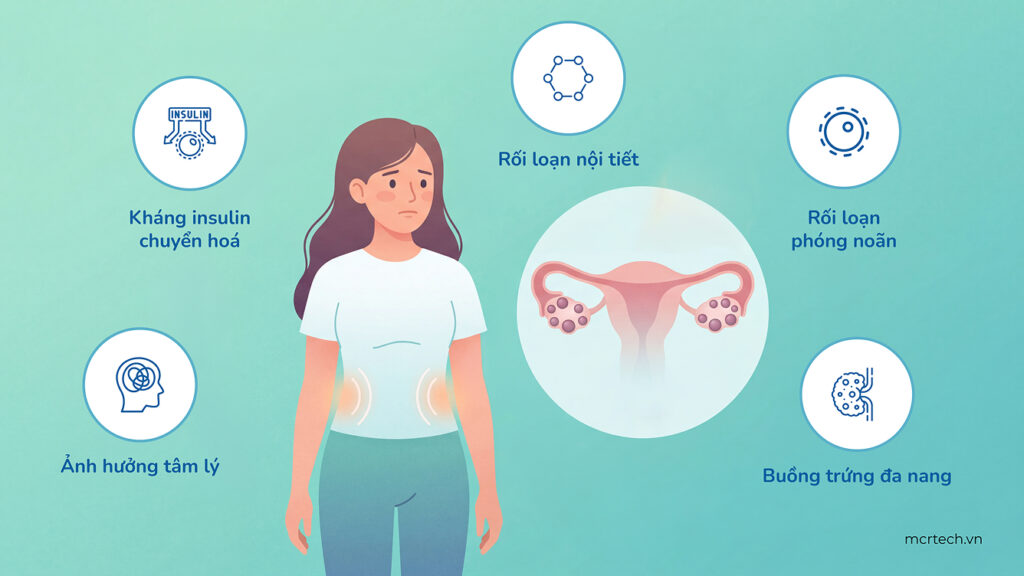
PCOS is now considered a global public health issue requiring a long-term, multidisciplinary management approach.
Pathophysiology
The pathophysiology of PCOS is multifactorial, involving a complex interaction between genetic, hormonal, and environmental factors. Dysregulation of the hypothalamic-pituitary-ovarian axis plays a central role, in which a relative increase in luteinizing hormone (LH) secretion compared with follicle-stimulating hormone (FSH) stimulates excessive androgen production by ovarian theca cells. In parallel, insulin resistance – commonly present even in non-obese women with PCOS – enhances ovarian androgen synthesis and reduces sex hormone-binding globulin levels, leading to elevated circulating free androgens. Additionally, low-grade chronic inflammation and adipose tissue dysfunction further exacerbate endocrine and metabolic disturbances in PCOS.
Clinical manifestations
PCOS presents with a wide spectrum of clinical manifestations that may vary across different stages of life. Common reproductive features include menstrual irregularities, oligomenorrhea or amenorrhea due to ovulatory dysfunction, and infertility. Clinical signs of hyperandrogenism include hirsutism, acne, and androgenic alopecia.
Moreover, many patients exhibit metabolic abnormalities such as central obesity, insulin resistance, impaired glucose tolerance, and dyslipidemia. Psychological disorders, including anxiety, depression, and reduced quality of life, are frequently reported, highlighting that PCOS is a multisystem disorder rather than a condition limited to reproductive organs.
Diagnosis of PCOS
The diagnosis of PCOS is primarily based on clinical evaluation and established international criteria, with the Rotterdam criteria being the most widely used in adults. According to these criteria, PCOS is diagnosed when at least two of the following three features are present: hyperandrogenism (clinical and/or biochemical), ovulatory dysfunction, and polycystic ovarian morphology on ultrasound, after exclusion of other causes of hyperandrogenism.
In adolescents, diagnosis requires greater caution due to the overlap between normal pubertal physiology and PCOS features, and ovarian ultrasound criteria are generally not emphasized.
Metabolic disorders and long-term complications
PCOS is strongly associated with an increased risk of metabolic disorders, particularly type 2 diabetes mellitus, metabolic syndrome, and cardiovascular disease. Insulin resistance plays a pivotal role in the development and progression of these complications and may occur early in the disease course. In addition, women with PCOS are at increased risk of endometrial hyperplasia and endometrial cancer due to prolonged exposure to unopposed estrogen. These risks often persist beyond reproductive age, underscoring the importance of lifelong monitoring and management of PCOS.
Treatment and management of PCOS
Current treatment strategies for PCOS focus on symptom control and prevention of long-term complications, using an individualized approach tailored to patient-specific goals. Lifestyle modification – including weight reduction, increased physical activity, and a healthy diet – is considered the cornerstone of PCOS management, particularly in overweight and obese patients.
Pharmacological treatments may include combined oral contraceptives to regulate menstrual cycles and reduce androgen levels, insulin-sensitizing agents such as metformin, and fertility treatments for women desiring pregnancy. Comprehensive management should also incorporate metabolic monitoring, psychological support, and long-term follow-up to optimize overall health outcomes.
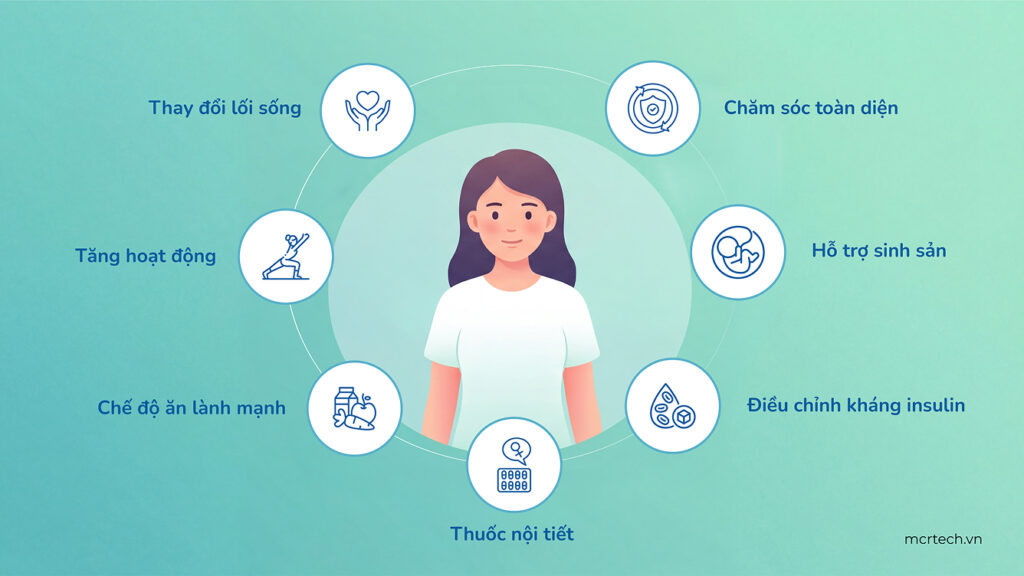
Current treatment for PCOS focuses on symptom management and prevention of long-term complications.
Public health implications
Given its high prevalence and multisystem impact, PCOS imposes a substantial burden on healthcare systems and society. The condition affects not only reproductive health but also increases the risk of chronic diseases and significantly impairs quality of life in women. Enhancing public awareness, standardizing diagnostic criteria, and developing integrated, long-term management strategies are essential to reducing disease burden and improving women’s health outcomes globally.
References:
- Witchel, S. F., Oberfield S.E, Peña A.S (2019). Polycystic ovary syndrome: Pathophysiology, presentation, and diagnosis. In Polycystic Ovary Syndrome (PMCID: PMC6676075). National Center for Biotechnology Information, U.S. National Library of Medicine.
https://www.ncbi.nlm.nih.gov/pmc/articles/PMC6676075/ - Stener-Victorin, E., Teede, H., Norman, R. J., Legro, R. S., Goodarzi, M. O., Dokras, A., Laven, J., Hoeger, K., & Piltonen, T. T. (2024). Polycystic ovary syndrome. Nature Reviews Disease Primers, 10, 27.
https://doi.org/10.1038/s41572-024-00511-3