Psoriasis: When the immune system attacks the skin
Keywords: Psoriasis, chronic skin disease, autoimmune skin disorder, skin inflammation
What is psoriasis?
Psoriasis is a chronic inflammatory skin disorder in which the immune system mistakenly attacks healthy skin cells. Normally, skin cells grow and shed gradually over several weeks. In people with psoriasis, this process becomes dramatically accelerated, causing skin cells to accumulate rapidly on the surface. As a result, thick, scaly plaques form on different parts of the body.
The most common type is plaque psoriasis, which appears as raised red patches covered with silvery-white scales. These plaques usually develop symmetrically on the elbows, knees, scalp, and lower back, although any body area may be affected. The disease can range from mild localized patches to severe widespread inflammation involving large areas of skin.
Psoriasis is now recognized as a systemic inflammatory disease rather than simply a cosmetic skin problem. Research shows that inflammation associated with psoriasis can affect multiple organs and increase the risk of several other diseases.
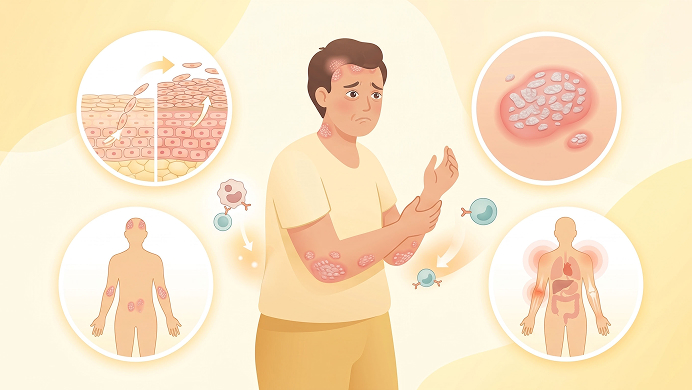
Illustration of the pathogenesis and clinical manifestations of psoriasis.
Common symptoms and clinical features
The symptoms of psoriasis vary depending on the type and severity of the disease. The hallmark feature is thickened, dry, inflamed skin covered with scales that may crack, bleed, or itch intensely. Many patients also experience burning sensations, soreness, or tenderness in affected areas.
Plaque psoriasis is the most frequent form, but other variants also exist. Guttate psoriasis appears as small drop-like lesions and often develops after streptococcal infections. Flexural psoriasis affects skin folds such as the armpits and groin, while pustular psoriasis produces pus-filled blisters. Erythrodermic psoriasis is a rare but life-threatening form characterized by widespread redness and severe inflammation.
Nail involvement is also common. Patients may develop nail pitting, discoloration, thickening, or separation of the nail from the nail bed. In some individuals, joint pain and stiffness occur due to psoriatic arthritis, a condition affecting up to 30% of psoriasis patients.
What causes psoriasis?
The exact cause of psoriasis is not fully understood, but scientists believe it results from a complex interaction between genetics, the immune system, and environmental triggers. Research estimates that the heritability of psoriasis may range from 60–90%, indicating a strong genetic component.
The disease develops when immune cells become overactive and release inflammatory cytokines such as TNF-α, IL-17, and IL-23. These inflammatory molecules stimulate excessive skin cell growth and chronic inflammation.
Several environmental factors can trigger or worsen psoriasis. Common triggers include stress, smoking, obesity, skin injuries, infections, cold weather, and certain medications such as lithium and beta-blockers. Alcohol consumption may also aggravate flare-ups.
Although psoriasis is not infectious, its visible symptoms often lead to misunderstanding and social stigma. Many patients report emotional distress, embarrassment, anxiety, and depression due to the appearance of their skin.
Psoriasis and other health problems
Modern research has shown that psoriasis is associated with numerous systemic conditions. One of the most important complications is psoriatic arthritis, which causes joint inflammation, swelling, and stiffness. If left untreated, it can result in permanent joint damage.
Patients with psoriasis also have higher risks of obesity, metabolic syndrome, cardiovascular disease, diabetes, and fatty liver disease. Chronic inflammation is believed to contribute significantly to these comorbidities. Severe psoriasis has even been associated with increased cardiovascular mortality.
Mental health problems are another major concern. Depression and anxiety occur more frequently in psoriasis patients compared with the general population. The psychosocial burden of living with a visible chronic skin disease can profoundly affect self-esteem, relationships, and quality of life.
How is psoriasis diagnosed?
Psoriasis is usually diagnosed clinically through physical examination of the skin, scalp, and nails. Dermatologists often recognize the characteristic appearance of psoriasis plaques immediately. In uncertain cases, a skin biopsy may be performed to confirm the diagnosis under microscopic examination.
Doctors may also evaluate disease severity by assessing the percentage of body surface affected and the impact on daily life. Screening for associated conditions such as psoriatic arthritis, cardiovascular disease, and mental health disorders is increasingly considered an essential part of psoriasis care.
Treatment options for psoriasis
Although there is currently no cure for psoriasis, many effective treatments can control symptoms and improve quality of life. Treatment depends on disease severity, affected body areas, and patient health status.
For mild psoriasis, topical therapies are usually the first choice. These include corticosteroid creams, vitamin D analogues, moisturizers, and medicated shampoos. Phototherapy using ultraviolet light may also help reduce inflammation and slow skin cell growth.
Moderate-to-severe psoriasis may require systemic medications such as methotrexate, cyclosporine, or acitretin. In recent years, biologic therapies have revolutionized psoriasis treatment. These medications specifically target inflammatory pathways such as TNF-α, IL-17, and IL-23, leading to remarkable improvement in many patients.
Small-molecule oral drugs such as apremilast have also shown promising effectiveness with relatively favorable safety profiles.
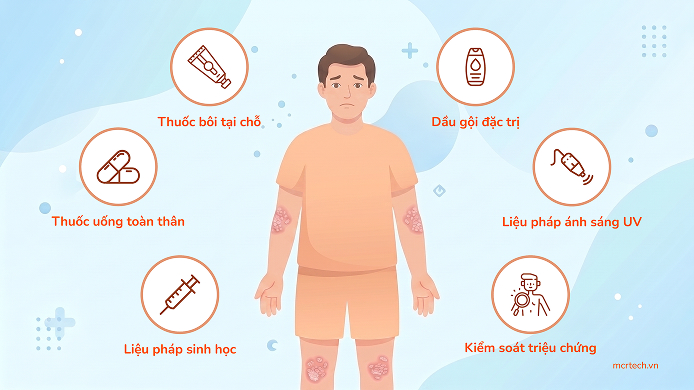
Treatment and management strategies for psoriasis.
Living with psoriasis
Living with psoriasis can be physically and emotionally challenging. Because the disease often fluctuates between flare-ups and remission, long-term management is essential. Maintaining a healthy lifestyle, avoiding triggers, managing stress, and following treatment plans consistently can significantly improve outcomes.
Support from healthcare professionals, family, and patient communities also plays a crucial role in helping individuals cope with the psychological burden of the disease. Increased public awareness is important to reduce stigma and misconceptions surrounding psoriasis.
References:
- Mayo Clinic. (2025, December 17). Psoriasis. https://www.mayoclinic.org/diseases-conditions/psoriasis/symptoms-causes/syc-20355840
- Antony R. et al. (2021 May). Psoriasis: a brief overview. https://pmc.ncbi.nlm.nih.gov/articles/PMC8140694/