What are uterine fibroids and are they dangerous?
Uterine fibroids are one of the most common benign gynecological conditions affecting women worldwide. While many fibroids cause no symptoms, others can lead to heavy menstrual bleeding, pelvic pain, anemia, and fertility challenges. Early recognition of symptoms and regular gynecological checkups are essential for timely diagnosis and management. With appropriate treatment and follow-up care, most women with uterine fibroids can maintain a good quality of life and protect their long-term reproductive health.
Keywords: uterine fibroids, gynecology, uterus, benign uterine tumors
What are uterine fibroids?
Uterine fibroids are noncancerous growths that develop from the smooth muscle cells and connective tissue of the uterus. Also known as leiomyomas or myomas, they are among the most common gynecological conditions affecting women of reproductive age. Although they are referred to as tumors, uterine fibroids are typically benign and rarely become cancerous.
Fibroids can vary significantly in size, ranging from tiny nodules that are barely visible to large masses that enlarge and distort the uterus. Some women may have a single fibroid, while others develop multiple fibroids at the same time. Depending on their size and location, fibroids may cause no symptoms at all or lead to a variety of health concerns that impact daily life and reproductive health.
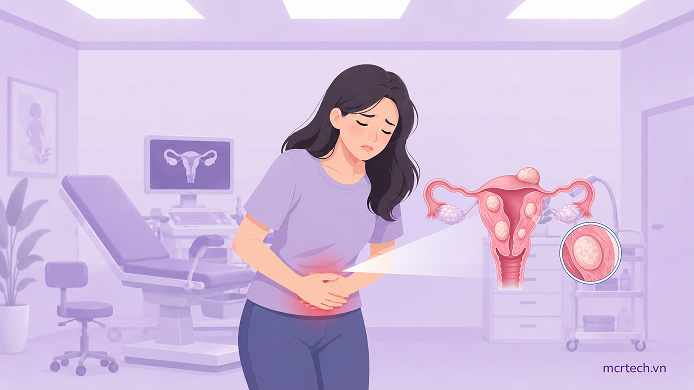
Illustration of uterine fibroids and their location within the uterus.
Common types of uterine fibroids
Uterine fibroids are classified according to where they grow within the uterus. The most common type is the intramural fibroid, which develops within the muscular wall of the uterus. As these fibroids enlarge, they can increase the overall size of the uterus.
Another type is the submucosal fibroid, which grows beneath the uterine lining and extends into the uterine cavity. This type is often associated with heavy menstrual bleeding and fertility problems. Subserosal fibroids develop on the outer surface of the uterus and may press against nearby organs such as the bladder or rectum. Some fibroids grow on a stalk-like structure and are known as pedunculated fibroids.
Understanding the type and location of fibroids is important because these factors often determine the symptoms experienced and the most appropriate treatment approach.
Symptoms of uterine fibroids you should not ignore
Many women with uterine fibroids experience no symptoms and may only discover the condition during a routine pelvic examination or ultrasound. However, when symptoms occur, they can range from mild discomfort to significant health problems.
One of the most common symptoms is heavy or prolonged menstrual bleeding. Women may notice unusually heavy periods, bleeding between cycles, or menstrual periods that last longer than normal. Over time, excessive blood loss can lead to iron-deficiency anemia, resulting in fatigue, weakness, dizziness, and shortness of breath.
Fibroids can also cause pelvic pain or pressure, particularly when they become larger. Some women experience lower back pain, abdominal bloating, or discomfort during sexual intercourse. If fibroids press against the bladder, they may cause frequent urination or difficulty emptying the bladder completely. Compression of the rectum can lead to constipation and a sensation of incomplete bowel movements.
In rare cases, a fibroid may outgrow its blood supply and begin to degenerate, causing sudden and severe pelvic pain that requires prompt medical evaluation.
Another type is the submucosal fibroid, which grows beneath the uterine lining and extends into the uterine cavity. This type is often associated with heavy menstrual bleeding and fertility problems. Subserosal fibroids develop on the outer surface of the uterus and may press against nearby organs such as the bladder or rectum. Some fibroids grow on a stalk-like structure and are known as pedunculated fibroids.
Understanding the type and location of fibroids is important because these factors often determine the symptoms experienced and the most appropriate treatment approach.
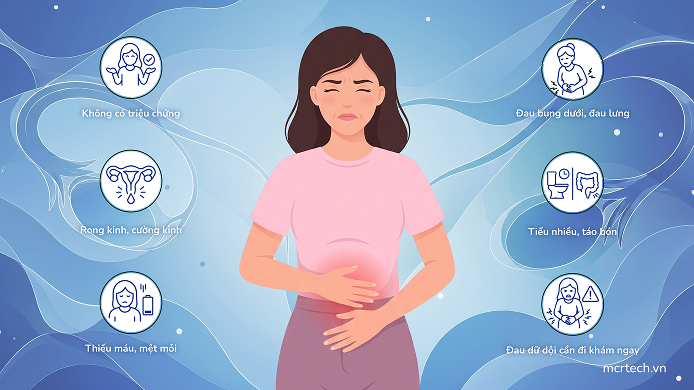
Common clinical manifestations of uterine fibroids.
What causes uterine fibroids?
The exact cause of uterine fibroids remains unknown. However, researchers believe that hormonal, genetic, and growth-related factors all contribute to their development.
Estrogen and progesterone, the two primary female reproductive hormones, appear to play a major role in fibroid growth. These hormones stimulate the uterine lining during each menstrual cycle and may also encourage fibroid cells to multiply. This explains why fibroids often grow during the reproductive years and may shrink after menopause when hormone levels decline.
Genetics is another important factor. Women with a family history of uterine fibroids are more likely to develop the condition themselves. Studies have also identified genetic mutations within fibroid tissue that differ from those found in normal uterine muscle cells.
Additionally, certain growth factors in the body, including insulin-like growth factor (IGF), may promote cell proliferation and contribute to fibroid formation and enlargement.
Risk factors for uterine fibroids
While any woman of reproductive age can develop uterine fibroids, several factors are associated with an increased risk.
Age is a significant factor, as fibroids are most commonly diagnosed during the reproductive years. Women who began menstruating at an early age may also have a higher likelihood of developing fibroids. Family history further increases risk, particularly if a mother or sister has been diagnosed with the condition.
Lifestyle and metabolic factors may also contribute. Obesity and excess body weight are linked to higher estrogen levels, which may promote fibroid growth. In addition, diets high in red meat and low in fruits, vegetables, and vitamin D have been associated with a greater risk of fibroid development.
Women who have never given birth may also be slightly more susceptible to developing uterine fibroids compared with those who have had children.
Are uterine fibroids dangerous?
In most cases, uterine fibroids are not life-threatening. However, they can significantly affect a woman’s quality of life and may lead to several complications if left untreated.
One of the most common complications is anemia caused by chronic heavy menstrual bleeding. Severe anemia can affect physical performance, concentration, and overall well-being. Large fibroids may also create persistent pelvic pressure or pain that interferes with daily activities.
Fibroids can sometimes compress surrounding organs, causing urinary symptoms, constipation, or abdominal discomfort. In rare cases, extremely large fibroids may affect kidney function by obstructing the urinary tract.
For women trying to conceive, certain fibroids – especially submucosal fibroids – may interfere with implantation or increase the risk of infertility. Therefore, regular monitoring and appropriate medical management are important to prevent complications and preserve reproductive health.
How do uterine fibroids affect pregnancy?
Many women with uterine fibroids go on to have healthy pregnancies and deliveries. Nevertheless, the presence of fibroids can increase the risk of certain pregnancy-related complications depending on their size, number, and location.
Fibroids that distort the uterine cavity may make it more difficult for an embryo to implant successfully. During pregnancy, hormonal changes can sometimes cause fibroids to grow, potentially leading to pain, discomfort, or pressure symptoms.
Research suggests that fibroids may be associated with an increased risk of miscarriage, placental abruption, preterm birth, and abnormal fetal positioning. Women with known fibroids who are planning pregnancy should discuss their condition with a healthcare provider to determine whether treatment is necessary before conception
Diagnosis and treatment of uterine fibroids
Diagnosis usually begins with a pelvic examination, during which a healthcare provider may detect an enlarged or irregularly shaped uterus. Ultrasound is the most commonly used imaging test to confirm the presence, size, and location of fibroids. In more complex cases, magnetic resonance imaging (MRI) may provide additional detail.
Treatment depends on several factors, including symptom severity, fibroid size, age, and future fertility goals. Women with small, asymptomatic fibroids may only require regular monitoring.
For symptomatic cases, medications may be prescribed to reduce bleeding, manage pain, or temporarily shrink fibroids. Hormonal therapies and gonadotropin-releasing hormone (GnRH) agonists are commonly used in selected patients.
When symptoms are severe or fertility is affected, procedural options may be recommended. These include uterine artery embolization, myomectomy (surgical removal of fibroids), and hysterectomy (removal of the uterus) for women who no longer wish to preserve fertility.
References:
- Cleveland Clinic. (May 7, 2023). Uterine Fibroids. https://my.clevelandclinic.org/health/diseases/9130-uterine-fibroids
- Mayo Clinic. (September 15, 2023). Uterine fibroids. https://www.mayoclinic.org/diseases-conditions/uterine-fibroids/symptoms-causes/syc-20354288