Thyroid cancer: A silent disease with diverse presentations
Keywords: Thyroid cancer, thyroid disease, metastasis, endocrine malignancy
Overview of thyroid cancer
Thyroid cancer is a malignant disease that originates from the cells of the thyroid gland, a butterfly-shaped endocrine organ located at the base of the neck. The thyroid plays a crucial role in regulating metabolism, heart rate, body temperature, and energy balance through the production of thyroid hormones.
Thyroid cancer develops when genetic mutations cause thyroid cells to grow uncontrollably and evade normal cell death mechanisms, leading to tumor formation. In some cases, cancer cells may invade surrounding tissues or metastasize to distant organs such as the lungs and bones.
Several histological types of thyroid cancer exist, each with different biological behaviors and prognoses. The most common form is papillary thyroid carcinoma, which generally grows slowly and has an excellent prognosis. Other forms include follicular thyroid carcinoma, medullary thyroid carcinoma, and anaplastic thyroid carcinoma, the latter being rare but highly aggressive.
The incidence of thyroid cancer has increased significantly over recent decades, partly due to improvements in imaging technologies that allow detection of very small thyroid nodules incidentally during CT or MRI scans performed for unrelated conditions. Despite this increase, most thyroid cancers remain highly treatable, with excellent long-term survival rates when detected early.

Illustration of thyroid cancer and its manifestations in the thyroid gland.
Pathophysiology and risk factors
Thyroid cancer arises from mutations in thyroid cells that disrupt normal cellular regulation. These genetic alterations stimulate uncontrolled proliferation and resistance to apoptosis, ultimately leading to tumor growth. Some mutations also enhance the ability of cancer cells to invade nearby tissues and metastasize.
Different thyroid cancer subtypes originate from distinct cell populations within the thyroid gland. Papillary and follicular thyroid cancers arise from follicular cells responsible for thyroid hormone production, whereas medullary thyroid carcinoma develops from parafollicular C cells that produce calcitonin.
Several risk factors are associated with thyroid cancer. One of the most significant is exposure to ionizing radiation, particularly during childhood. Individuals who received radiation therapy to the head and neck region have a substantially increased risk of developing thyroid malignancies later in life.
Female sex is another important risk factor, with women being affected approximately three times more frequently than men. Hormonal influences, particularly estrogen-related mechanisms, are believed to contribute to this difference.
Inherited genetic syndromes also play a major role in certain forms of thyroid cancer. Mutations in the RET proto-oncogene are strongly associated with medullary thyroid carcinoma and multiple endocrine neoplasia type 2 (MEN2). Familial predisposition has also been identified in some papillary thyroid cancers.
Additional contributing factors may include iodine imbalance, chronic thyroid inflammation, and environmental exposures, although their exact roles remain under investigation.
Clinical manifestations
Thyroid cancer is often asymptomatic in its early stages, which contributes to delayed diagnosis. Many cases are discovered incidentally during routine imaging or physical examination. Community experiences discussed on Reddit also frequently describe diagnosis after incidental findings rather than obvious symptoms.
As the tumor enlarges, patients may develop a thyroid nodule or neck lump that can be felt through the skin. Some individuals report a sensation of neck fullness or tightness, particularly when wearing close-fitting collars.
Local tumor growth may compress adjacent structures, leading to:
- Hoarseness or voice changes due to recurrent laryngeal nerve involvement
- Difficulty swallowing (dysphagia)
- Difficulty breathing in advanced cases
- Persistent neck or throat pain
- Enlarged cervical lymph nodes
Different thyroid cancer subtypes may produce distinct clinical features. Medullary thyroid carcinoma may cause diarrhea or flushing due to excess calcitonin secretion, whereas anaplastic thyroid carcinoma can present with rapidly enlarging neck masses and severe compressive symptoms.
Although thyroid function is often normal, some patients report nonspecific symptoms such as fatigue, anxiety, heat intolerance, or throat pressure. Online patient discussions suggest that many symptoms may overlap with other thyroid disorders, emphasizing the complexity of clinical presentation.
In metastatic disease, symptoms depend on the organs involved. Common metastatic sites include the lungs, bones, liver, and brain.
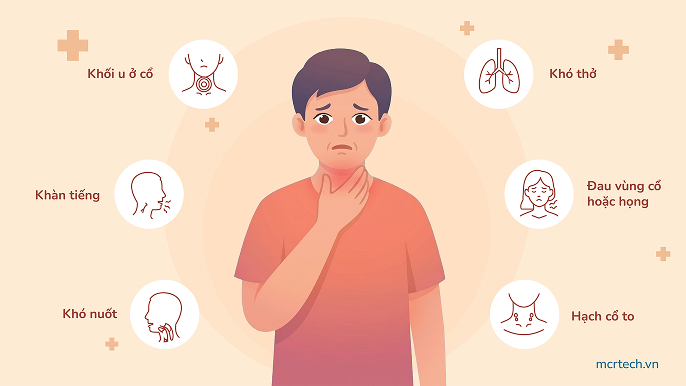
Common signs and symptoms of thyroid cancer.
Diagnosis
The diagnosis of thyroid cancer involves a combination of clinical evaluation, laboratory testing, imaging studies, and histopathological confirmation.
Initial assessment usually begins with a physical examination, during which clinicians evaluate thyroid nodules, cervical lymphadenopathy, and compressive symptoms. Blood tests assessing thyroid function may also be performed, although thyroid hormone levels are often normal in thyroid cancer patients.
Ultrasound imaging
High-resolution thyroid ultrasound is the primary imaging modality for evaluating thyroid nodules. Ultrasound helps determine nodule size, composition, vascularity, calcifications, and suspicious lymph node involvement. Certain ultrasound features such as microcalcifications, irregular margins, and hypoechogenicityraise suspicion for malignancy.
Fine-needle aspiration biopsy (FNA)
Fine-needle aspiration biopsy is considered the gold standard for evaluating suspicious thyroid nodules. Under ultrasound guidance, a thin needle is used to collect cells for cytological examination. FNA is minimally invasive and highly effective for distinguishing benign from malignant lesions.
Molecular and genetic testing
In selected cases, molecular testing may identify genetic mutations, which help guide prognosis and targeted therapy decisions. Genetic screening is particularly important in medullary thyroid carcinoma associated with hereditary syndromes.
Advanced imaging and staging
If metastatic spread is suspected, additional imaging studies may include CT scans, MRI, PET scans, or radioactive iodine scans. These techniques help evaluate regional invasion and distant metastasis.
Early diagnosis is critical because prognosis is significantly better before distant metastasis occurs.
Treatment and Management
The treatment of thyroid cancer depends on tumor type, stage, genetic profile, metastatic status, and overall patient health. Most thyroid cancers respond well to treatment, particularly differentiated thyroid cancers.
Surgical management
Surgery is the primary treatment for most thyroid cancers. Procedures include:
- Lobectomy (removal of one thyroid lobe)
- Total thyroidectomy (complete thyroid removal)
- Neck dissection if lymph node metastases are present
Surgical removal is often highly effective, especially in localized disease.
Radioactive iodine therapy (RAI)
After surgery, radioactive iodine therapy may be used to destroy residual thyroid tissue or metastatic differentiated thyroid cancer cells. Thyroid cells naturally absorb iodine, allowing selective targeting of cancerous tissue. RAI is particularly useful in papillary and follicular thyroid cancers.
Hormone suppression therapy
Patients who undergo thyroidectomy usually require lifelong levothyroxine replacement therapy. In addition to replacing thyroid hormones, levothyroxine suppresses thyroid-stimulating hormone (TSH), which may otherwise stimulate tumor growth.
Targeted therapy and advanced treatments
Advanced or metastatic thyroid cancers may require targeted therapies such as tyrosine kinase inhibitors. These drugs interfere with molecular pathways involved in tumor growth and angiogenesis.
For aggressive cancers such as anaplastic thyroid carcinoma, multimodal approaches including radiation therapy, chemotherapy, and immunotherapy may be necessary.
Long-Term monitoring
Long-term follow-up is essential because thyroid cancer can recur years after treatment. Monitoring strategies include:
- Periodic neck ultrasound
- Serum thyroglobulin or calcitonin measurement
- Radioiodine scanning in selected cases
Most recurrences occur within the first five years after diagnosis, but prognosis generally remains favorable with appropriate management.
Prevention and control
There is currently no guaranteed method to prevent most thyroid cancers because the exact causes of many genetic mutations remain unclear. However, minimizing unnecessary radiation exposure, especially during childhood, may reduce risk.
For individuals with hereditary syndromes associated with medullary thyroid carcinoma, preventive thyroidectomy may be recommended after genetic counseling and mutation testing.
Public awareness, early medical evaluation of thyroid nodules, and regular follow-up for high-risk individuals remain essential for early detection and improved outcomes.
References:
- Mayo Clinic. (2025, December 23). Thyroid cancer. https://www.mayoclinic.org/diseases-conditions/thyroid-cancer/syc-20354161
- Cleveland Clinic. (2025, November 11). Thyroid Cancer. https://my.clevelandclinic.org/health/diseases/12210-thyroid-cancer