Gestational diabetes and its lasting impacts
Keywords: Gestational diabetes mellitus, pregnancy complications, pregnancy, hyperglycemia
Overview of gestational diabetes
Gestational diabetes mellitus (GDM) is a condition characterized by elevated blood glucose levels that are first recognized during pregnancy. It typically develops in the second or third trimester and usually resolves after delivery. However, despite being temporary, GDM has important implications for both maternal and fetal health.
GDM occurs when the body cannot produce enough insulin to meet the increased metabolic demands of pregnancy. Hormonal changes during pregnancy, particularly the production of placental hormones, can lead to insulin resistance, making it more difficult for cells to utilize glucose effectively.
Women with GDM are at increased risk of developing type 2 diabetes later in life, and their children are also at higher risk of obesity and metabolic disorders.
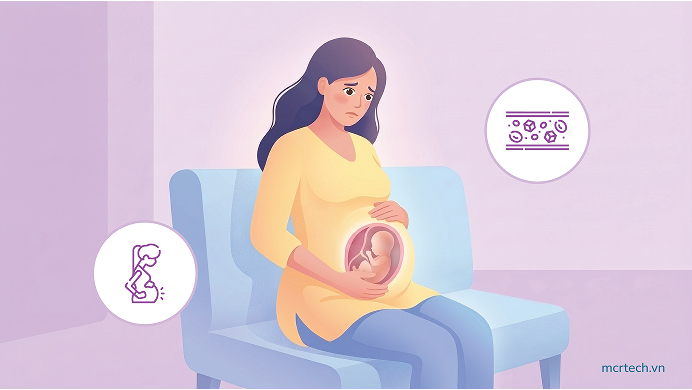
Illustration of gestational diabetes mellitus and its impact during pregnancy.
Pathophysiology and risk factors
The development of gestational diabetes mellitus (GDM) is influenced by a combination of metabolic, genetic, and environmental factors that contribute to insulin resistance and impaired insulin secretion during pregnancy.
One of the most significant risk factors is maternal obesity, which is strongly associated with baseline insulin resistance even before pregnancy. Excess adipose tissue promotes chronic low-grade inflammation and the release of adipokines that impair insulin signaling pathways.
Advanced maternal age (typically over 25–30 years) is another important factor, as insulin sensitivity naturally declines with age, increasing the likelihood of glucose intolerance during pregnancy.
A family history of diabetes, particularly in first-degree relatives, suggests a genetic predisposition to impaired glucose metabolism. Similarly, women with a previous history of gestational diabetes are at a substantially higher risk of recurrence in subsequent pregnancies, indicating an underlying metabolic vulnerability.
Certain ethnic groups, including individuals of South Asian, African, Hispanic, or Pacific Islander descent, have a higher prevalence of GDM, likely due to genetic and lifestyle-related factors.
Additional risk factors include polycystic ovary syndrome (PCOS), which is associated with insulin resistance, and a history of delivering a macrosomic infant (birth weight >4 kg), reflecting possible undiagnosed hyperglycemia in prior pregnancies.
Other contributing factors include sedentary lifestyle, poor dietary habits, and excessive gestational weight gain, all of which exacerbate insulin resistance.
Collectively, these risk factors highlight the multifactorial nature of GDM, where both pre-existing metabolic conditions and pregnancy-related physiological changes interact to impair glucose regulation.
Clinical manifestations
Gestational diabetes is often asymptomatic, which is why routine screening during pregnancy is essential. Unlike other forms of diabetes, many women with GDM do not experience obvious symptoms.
When symptoms do occur, they may include increased thirst, frequent urination, fatigue, and recurrent infections. However, these symptoms are often mild and may be mistaken for normal physiological changes during pregnancy.
Although symptoms in the mother may be minimal, uncontrolled GDM can have significant effects on the fetus. These include excessive fetal growth (macrosomia), increased risk of birth complications, neonatal hypoglycemia, and respiratory distress after birth.
Long-term consequences for the child may include an increased risk of obesity and type 2 diabetes later in life.
Diagnosis
Screening for GDM is typically performed between 24 and 28 weeks of gestation.
The most commonly used diagnostic method is the oral glucose tolerance test (OGTT). After fasting, the patient consumes a glucose solution, and blood glucose levels are measured at specific intervals. Elevated glucose levels above defined thresholds confirm the diagnosis.
Some healthcare systems also use a two-step approach, beginning with a glucose challenge test (GCT) followed by a confirmatory OGTT if results are abnormal.
Early screening may be recommended for women with high-risk factors, such as obesity or a history of diabetes.
Treatment and management
The primary goal of managing GDM is to maintain blood glucose levels within a target range to reduce the risk of complications for both mother and baby.
Lifestyle modification is the first-line treatment. This includes a balanced diet tailored to pregnancy, regular physical activity, and weight management. Monitoring blood glucose levels at home is also an essential component of care.
If lifestyle interventions are insufficient, pharmacological treatment may be required. Insulin is the preferred treatment during pregnancy, as it does not cross the placenta and is considered safe for the fetus. In some cases, oral medications may be used under medical supervision.
Close monitoring of fetal growth and maternal health is necessary throughout pregnancy.
Prevention and control
Although not all cases of gestational diabetes can be prevented, several strategies can significantly reduce the risk, particularly in high-risk individuals. Prevention focuses on improving insulin sensitivity and maintaining metabolic balance before and during pregnancy.
Preconception care plays a crucial role. Women planning pregnancy are encouraged to achieve a healthy body weight, as even modest weight loss can significantly improve insulin sensitivity. Nutritional optimization before conception helps establish a healthier metabolic baseline.
During pregnancy, dietary management is a key preventive strategy. A balanced diet with controlled carbohydrate intake, emphasizing complex carbohydrates, fiber, lean proteins, and healthy fats, helps maintain stable blood glucose levels. Avoiding excessive intake of refined sugars and processed foods is particularly important.
Regular physical activity enhances insulin sensitivity by increasing glucose uptake in skeletal muscle independent of insulin. Moderate exercise, such as walking or prenatal fitness programs, is generally recommended unless contraindicated.
Weight management during pregnancy is also critical. Excessive gestational weight gain is associated with increased insulin resistance and a higher risk of GDM. Guidelines for appropriate weight gain vary depending on pre-pregnancy body mass index (BMI).
Early screening and monitoring are essential, especially for women with known risk factors. Detecting glucose intolerance early allows for timely intervention, which can prevent progression to overt GDM and reduce complications.
After delivery, long-term prevention strategies are necessary, as women with a history of GDM have a significantly increased risk of developing type 2 diabetes. Lifestyle interventions, including maintaining a healthy diet, regular exercise, and periodic glucose screening, are recommended to reduce this risk.
Overall, prevention of GDM requires a combination of individual behavioral changes and effective healthcare strategies, emphasizing both maternal and long-term metabolic health.

Prevention and management strategies for gestational diabetes mellitus.
References:
- Milton Keynes University Hospital. (2024, April 10). Gestational Diabetes mellitus. https://www.mkuh.nhs.uk/patient-information-leaflet/gestational-diabetes-mellitus
- Cleveland Clinic. (2026, January 28). Gestational diabetes. https://my.clevelandclinic.org/health/diseases/9012-gestational-diabetes