Tuberculosis and a global airborne threat
Keywords: Tuberculosis, TB, chronic lung disease, Mycobacterium tuberculosis, immunosuppression
Overview of tuberculosis
Tuberculosis (TB) is a chronic infectious disease caused by the bacterium Mycobacterium tuberculosis, which primarily affects the lungs but can also involve other organs. Despite being both preventable and curable, TB remains one of the leading causes of death from infectious diseases worldwide. Each year, approximately 10 million people develop TB, and around 1.5 million deaths are reported globally.
TB has affected humans for thousands of years and continues to pose a major public health challenge, particularly in low- and middle-income countries where healthcare access is limited. Before the COVID-19 pandemic, TB was the most prevalent infectious disease globally.
A key feature of TB is its ability to exist in two forms: latent infection and active disease. Individuals with latent TB harbor the bacteria without symptoms and are not infectious, but they carry a lifetime risk (approximately 5–10%) of progressing to active TB disease.

Illustration of tuberculosis and its basic epidemiological characteristics.
Transmission and pathogenesis
Tuberculosis is transmitted through the air when individuals with active pulmonary TB cough, sneeze, or speak, releasing infectious droplets containing the bacteria.
Once inside the body, Mycobacterium tuberculosis primarily infects the lungs and can evade the host immune system by surviving within macrophages. The immune response leads to the formation of granulomas, which may contain the infection in a latent state or fail, allowing the disease to progress.
The risk of developing active TB is significantly higher in individuals with weakened immune systems, such as those with HIV, malnutrition, diabetes, or those who smoke.
Clinical manifestations
The symptoms of TB often develop slowly and may remain mild for months, contributing to delayed diagnosis and continued transmission. Common clinical features include persistent cough, chest pain, fatigue, weight loss, fever, and night sweats.
In advanced cases, patients may produce sputum or blood when coughing, reflecting lung tissue damage. TB can also present as extrapulmonary disease, affecting organs such as lymph nodes, bones, kidneys, or the central nervous system.
Because symptoms are nonspecific and progress gradually, TB is often underdiagnosed, especially in resource-limited settings.
Diagnosis
Diagnosis of TB requires a combination of clinical suspicion, epidemiological assessment, and laboratory testing. Patients suspected of pulmonary TB are typically asked to provide sputum samples for microbiological analysis.
Common diagnostic methods include sputum smear microscopy, culture, and rapid molecular tests such as nucleic acid amplification tests (NAATs), which improve accuracy and speed of detection.
For latent TB, screening tests such as the Mantoux tuberculin skin test and interferon-gamma release assays (IGRAs) are used, although both have limitations in sensitivity and specificity.
Treatment and management
Tuberculosis is a curable disease when treated appropriately. Standard treatment involves a combination of antibiotics administered over at least six months, commonly including rifampicin and isoniazid.
However, treatment is complex due to the prolonged duration, potential side effects, and the need for strict adherence. Failure to complete treatment can lead to drug-resistant TB, which requires longer and more complicated treatment regimens.
Recent advances include the development of new anti-TB drugs and shorter treatment regimens for latent TB, aiming to improve patient compliance and outcomes.
Treatment and management strategies for tuberculosis.
Prevention and control
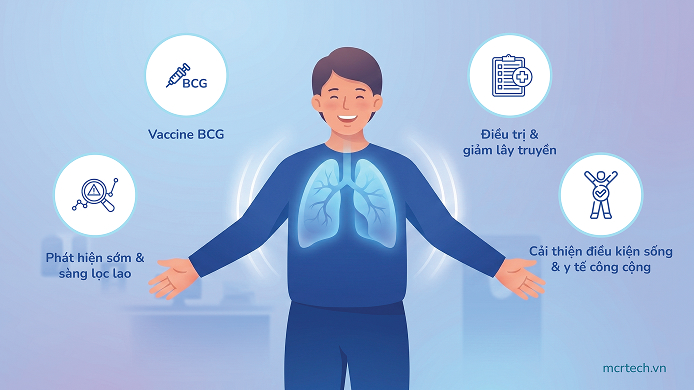
Preventing TB relies on early detection, effective treatment, and public health interventions to reduce transmission. Screening high-risk populations and ensuring timely treatment are critical strategies.
The Bacillus Calmette–Guérin (BCG) vaccine provides partial protection, particularly in children against severe forms of TB, but is less effective in preventing adult pulmonary TB.
Public health measures such as improving living conditions, reducing overcrowding, and strengthening healthcare systems are essential to controlling the spread of TB
Interesting aspects and medical significance
One of the most notable features of TB is its latent phase, during which the bacteria can remain dormant for years without causing symptoms. This makes TB particularly difficult to eliminate, as individuals may develop active disease long after initial infection.
Additionally, TB is closely associated with social determinants of health, including poverty, malnutrition, and limited access to healthcare. These factors contribute significantly to its persistence as a global health threat.
From a medical perspective, TB has played a major role in advancing microbiology and infectious disease research, from Robert Koch’s discovery of the bacterium in 1882 to modern molecular diagnostics and drug development.
References:
- Communicable Diseases Agency. (n.d.). Tuberculosis. https://www.cda.gov.sg/public/diseases/tuberculosis/
- Tobin, E. H., & Tristram, D. (2024, December 22). Tuberculosis overview. StatPearls – NCBI Bookshelf. https://www.ncbi.nlm.nih.gov/books/NBK441916/