The silent threat in your stomach: Understanding gastric cancer before it’s too late
Keyword: Stomach cancer, gastric cancer, H. pylori infection, digestive cancer
Stomach cancer, also known as gastric cancer, is one of the most serious diseases affecting the digestive system. Although it develops slowly over many years, it is often discovered only after reaching an advanced stage because the early symptoms are vague and easily mistaken for common digestive problems.
What is stomach cancer?
The stomach is an important organ located in the upper abdomen that helps digest food. Stomach cancer occurs when cells in the stomach lining undergo genetic changes and begin multiplying abnormally. Over time, these cells form malignant tumors that may invade deeper layers of the stomach wall and spread to nearby tissues or distant organs. The most common type of stomach cancer is adenocarcinoma, which develops from mucus-producing cells in the stomach lining.
In many cases, stomach cancer develops slowly, sometimes over decades. This slow progression is one reason why people often ignore the warning signs until the disease becomes severe. Early diagnosis is critical because treatment is far more successful when the cancer is still confined to the stomach.
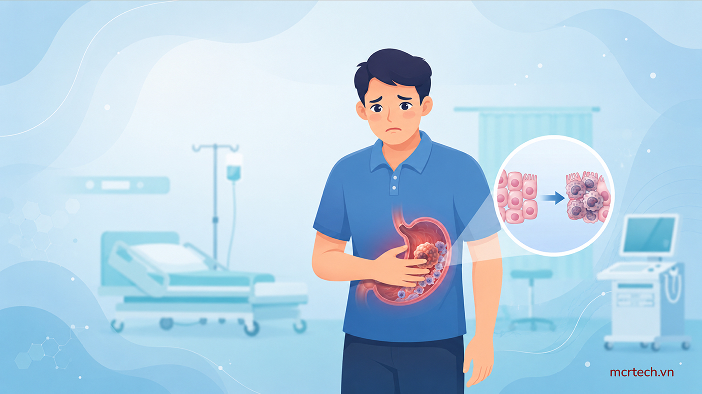
Overview of gastric cancer and its pathological characteristics.
Early symptoms that are often ignored
One of the most dangerous aspects of stomach cancer is that early symptoms can appear mild and nonspecific. Many people initially believe they are suffering from indigestion, gastritis, or acid reflux. Common early symptoms include persistent heartburn, bloating after meals, stomach discomfort, feeling full quickly after eating small amounts of food, nausea, and loss of appetite. Some individuals may also experience unexplained fatigue or mild abdominal pain.
As the disease progresses, symptoms become more severe. Patients may develop unintentional weight loss, vomiting, difficulty swallowing, black stools caused by internal bleeding, or vomiting blood. Advanced stomach cancer can also spread to the liver, lymph nodes, or abdominal cavity, causing jaundice, swollen abdomen, and severe weakness.
Many people online describe how easily these symptoms can be confused with less serious digestive disorders. Discussions on Reddit show that persistent indigestion, bloating, acid reflux, fatigue, and unexplained weight loss are among the symptoms that frequently raise concern among patients before diagnosis.

Common early symptoms of gastric cancer.
What causes stomach cancer?
The exact cause of stomach cancer is not completely understood, but experts believe that long-term damage to the stomach lining plays a major role. One of the most significant risk factors is infection with Helicobacter pylori (H. pylori), a bacterium that causes chronic inflammation and stomach ulcers. Over time, this persistent irritation can lead to cellular mutations and cancer development.
Diet also strongly influences risk. Consuming large amounts of salty, smoked, or processed foods while eating too few fruits and vegetables can increase the likelihood of gastric cancer. Smoking is another major contributor because tobacco chemicals damage stomach tissues and promote abnormal cell growth. Chronic acid reflux, stomach polyps, obesity, and long-term gastritis are also associated with increased risk.
Genetics may play a role as well. Individuals with a family history of stomach cancer or inherited syndromes such as Lynch syndrome and hereditary diffuse gastric cancer have a higher risk of developing the disease.
Who is most at risk?
Although stomach cancer can affect anyone, it is more commonly diagnosed in older adults. The average age at diagnosis is around 68 years old, and men are generally at slightly higher risk than women. However, younger adults can also develop stomach cancer, especially when genetic factors or chronic stomach inflammation are involved. Research highlighted in community discussions suggests that younger patients with gastric cancer may sometimes experience more aggressive disease progression. This emphasizes the importance of not ignoring persistent digestive symptoms simply because of age.
How is stomach cancer diagnosed?
Doctors use several methods to diagnose stomach cancer. The most important test is an upper endoscopy, where a flexible tube with a camera is passed through the throat into the stomach to look for abnormal tissue. During this procedure, doctors can take biopsies for laboratory analysis. Imaging tests such as CT scans, PET scans, and barium swallow X-rays may also help determine the size and spread of the tumor. Blood tests may reveal anemia caused by chronic stomach bleeding. In advanced cases, additional tests help determine whether the cancer has spread to nearby organs or lymph nodes. Accurate staging is essential because treatment decisions depend heavily on how advanced the disease is.
Treatment options for gastric cancer
Treatment for stomach cancer depends on the stage of the disease, the tumor location, and the patient’s overall health. Surgery is often the primary treatment when the cancer is detected early. Surgeons may remove part or all of the stomach along with nearby lymph nodes.
Chemotherapy and radiation therapy are commonly used before or after surgery to shrink tumors and destroy remaining cancer cells. More recently, targeted therapies and immunotherapy have improved outcomes for some patients by attacking specific cancer cell characteristics or helping the immune system recognize cancer cells more effectively. Despite these advances, prognosis remains significantly better when the cancer is diagnosed early. Unfortunately, many cases are identified only after symptoms become severe, making treatment more difficult.
Can stomach cancer be prevented?
Although not all cases can be prevented, lifestyle changes can reduce risk substantially. Eating a balanced diet rich in fruits and vegetables while limiting salty and smoked foods is strongly recommended. Avoiding smoking and reducing alcohol consumption are also important protective measures. Treating H. pylori infections early can lower chronic inflammation and potentially reduce cancer risk.
People with persistent digestive symptoms, unexplained weight loss, or a strong family history of gastric cancer should seek medical evaluation promptly. Early detection can save lives because stomach cancer is much more treatable in its initial stages.
Stomach cancer is often called a “silent disease” because its early symptoms resemble ordinary digestive problems. However, behind persistent indigestion, bloating, or unexplained fatigue may lie a life-threatening condition that requires urgent attention. Understanding the warning signs, risk factors, and prevention strategies is essential for improving early diagnosis and survival. While modern medicine has significantly improved treatment options, awareness remains one of the strongest tools in fighting gastric cancer.
References:
- National Health Service. (2023, February 14). Stomach cancer. https://www.nhs.uk/conditions/stomach-cancer/
- Mayo Clinic. (2024, June 19). Stomach cancer: Symptoms and causes. https://www.mayoclinic.org/diseases-conditions/stomach-cancer/symptoms-causes/syc-20352438