Acne: What is happening beneath the surface of the skin?
Keywords: Acne, sebaceous glands, skin inflammation, hair follicles, sebum.
Definition
Acne is a common dermatological condition that occurs when hair follicles become clogged with sebum and dead skin cells. This blockage leads to the formation of skin lesions such as whiteheads, blackheads, inflammatory papules, or pustules. Acne commonly appears in areas of the skin that contain many sebaceous glands, including the face, forehead, chest, back, and shoulders. It is considered a chronic inflammatory disorder of the pilosebaceous unit and can affect both adolescents and adults.
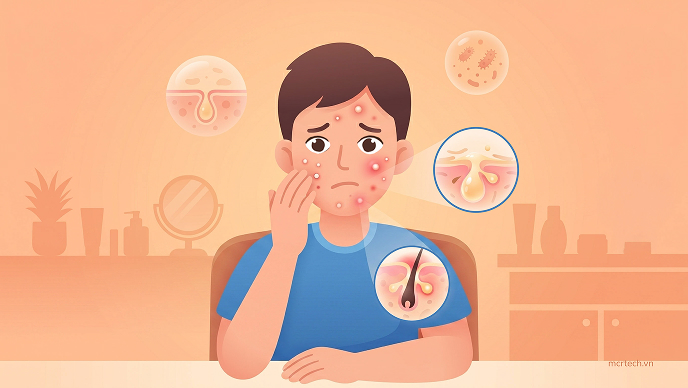
Illustration of the pathogenesis and clinical manifestations of acne.
Epidemiology
Acne is one of the most common skin conditions worldwide. It can occur in people of all ages and ethnic backgrounds but is most prevalent among adolescents and young adults. Most teenagers experience some degree of acne due to hormonal changes during puberty. Although many cases improve with age, some individuals may continue to experience acne into their 30s, 40s, or even later. In adults, acne tends to occur more frequently in women than in men.
Causes and risk factors
Acne develops as a result of the interaction of several biological factors within the skin. Four main mechanisms contribute to the development of acne: increased sebum production, blockage of hair follicles by dead skin cells, proliferation of skin bacteria, and inflammatory responses of the body. When these factors occur simultaneously, the hair follicles may become inflamed and acne lesions can develop.
Several factors may increase the risk of developing acne, including:
- Hormonal changes, particularly during puberty, pregnancy, or the menstrual cycle
- Genetic predisposition, especially if parents had acne
- Use of certain medications, such as corticosteroids or testosterone
- Exposure to oily substances or cosmetics that clog pores
- Friction or pressure on the skin, for example from helmets, backpacks, or phones
- Diet and stress, which may worsen acne in some individuals
Pathophysiology
Under normal conditions, sebaceous glands produce sebum, which helps moisturize and protect the skin. Sebum is released onto the skin surface through the pores of hair follicles. However, when dead skin cells and sebum accumulate inside the follicle, the pores may become blocked. This blockage creates a favorable environment for bacterial growth and triggers an inflammatory response. When the follicular wall ruptures, sebum, bacteria, and cellular debris can spread into the surrounding tissues, leading to inflammatory lesions such as papules, pustules, or deeper inflammatory nodules. Prolonged inflammation may result in scarring or changes in skin pigmentation.
Clinical manifestations
The manifestations of acne can vary depending on the severity of the condition. Common types of acne lesions include:
- Whiteheads: clogged pores that remain beneath the surface of the skin
- Blackheads: pores that open at the skin surface and appear black due to oxidation
- Papules: small red, inflamed bumps that may be tender
- Pustules: papules that contain pus at the tip
- Nodules: large, solid, and painful lumps beneath the skin
- Cysts: deep, pus-filled lesions that can be painful
These lesions commonly appear on the face, forehead, back, chest, and shoulders—areas of the body with many sebaceous glands.
Diagnosis
The diagnosis of acne is primarily based on clinical examination and the characteristics of the skin lesions. Dermatologists evaluate the type of lesions, their location, and the severity of the condition. In most cases, no special laboratory tests are required. However, in some patients with unusual symptoms or suspected hormonal disorders, hormone tests may be performed to identify underlying causes.
Treatment
The treatment of acne aims to reduce sebum production, prevent follicular blockage, control bacterial growth, and decrease inflammation. Treatment options may include:
- Topical medications such as benzoyl peroxide, retinoids, or topical antibiotics
- Oral medications such as antibiotics, hormone-regulating drugs, or isotretinoin in severe cases
- Hormonal therapy for some women with hormone-related acne
- Dermatological procedures such as chemical peels, laser therapy, or drainage of lesions
Treatment should be individualized depending on the severity of the condition and the characteristics of each patient.
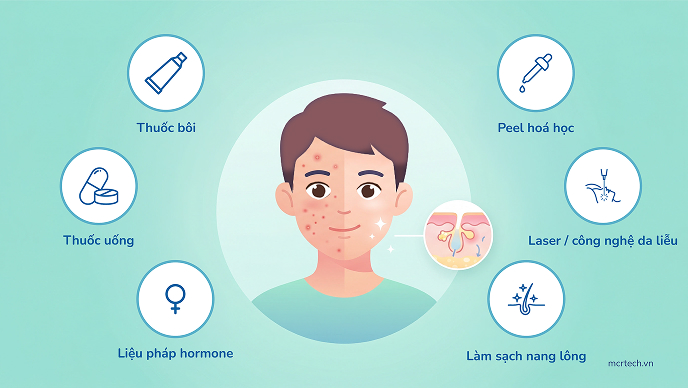
Treatment modalities for acne based on disease severity and clinical characteristics.
Prevention
Although acne cannot always be completely prevented, certain measures may help reduce the risk of flare-ups, including:
- Maintaining proper skin hygiene and washing the face gently every day
- Avoiding cosmetics that clog pores
- Avoiding touching or squeezing pimples
- Maintaining a healthy diet and lifestyle
- Managing stress and getting adequate sleep
These practices can help maintain healthy skin and reduce the recurrence of acne.
References:
- Mayo Clinic. (2024, July 20). Acne – Symptoms and causes. https://www.mayoclinic.org/diseases-conditions/acne/symptoms-causes/syc-20368047
- National Institute of Arthritis and Musculoskeletal and Skin Diseases. (2023, July). Acne. National Institutes of Health. https://www.niams.nih.gov/health-topics/acne