When small changes in menstruation become warning signs from the female body
Menstrual irregularities are common conditions among women and may be associated with hormonal imbalance, gynecological disorders, or lifestyle factors. Understanding their causes and symptoms is important for early detection and timely management, thereby helping protect women’s reproductive health.
Keywords: Menstrual irregularities, menstrual cycle, hormonal imbalance, gynecological health.
Definition
Menstrual irregularities refer to abnormalities related to the menstrual cycle, including changes in frequency, duration, or volume of menstrual bleeding. A normal menstrual cycle typically lasts about 21–35 days, with menstrual bleeding lasting around 2–7 days. When the cycle occurs too early or too late, lasts unusually long, or the amount of menstrual bleeding is excessively heavy or unusually light, it is considered a menstrual irregularity. Common forms include amenorrhea (absence of menstruation), oligomenorrhea (infrequent menstruation), menorrhagia (heavy or prolonged bleeding), and severe dysmenorrhea.

Illustration of the common manifestations of menstrual disorders.
Epidemiology
Menstrual irregularities are among the most common gynecological health concerns in women of reproductive age, particularly among adolescents and young women. During puberty, menstrual cycles are often unstable because hormonal regulation and ovulation have not yet fully matured. Many cases of abnormal uterine bleeding occur when the ovaries fail to release an egg (anovulation), causing menstrual cycles to occur earlier or later than expected and sometimes resulting in heavier bleeding.
Etiology and risk factors
Menstrual irregularities can arise from various causes, including hormonal imbalances, gynecological disorders, and lifestyle factors. Common causes include polycystic ovary syndrome (PCOS), thyroid disorders, endometriosis, or uterine fibroids. In addition, factors such as psychological stress, rapid weight changes, excessive physical exercise, or eating disorders may affect hormonal regulation and alter the menstrual cycle. Certain medications, hormonal contraceptives, or chronic medical conditions may also contribute to irregular menstruation.
Pathophysiology
The pathophysiology of menstrual irregularities is often associated with imbalances in the hypothalamic–pituitary–ovarian axis, the system responsible for regulating the menstrual cycle. When the regulation of hormones such as estrogen and progesterone is disrupted, ovulation may not occur or may occur irregularly. This leads to asynchronous development of the endometrium and results in symptoms such as infrequent menstruation, heavy bleeding, or amenorrhea. In many cases, endocrine disorders or structural abnormalities of the uterus and ovaries may further disrupt this regulatory process.
Clinical manifestations
Symptoms of menstrual irregularities may present in various forms. Patients may experience unusually short cycles (less than 21 days) or long cycles (more than 35 days), irregular periods between months, or bleeding between menstrual cycles. Some individuals may also experience heavy menstrual bleeding lasting longer than seven days or severe menstrual cramps. In addition, related symptoms such as fatigue, anemia, pelvic pain, or mood changes may occur due to hormonal fluctuations.
Diagnosis
The diagnosis of menstrual irregularities is usually based on medical history, menstrual cycle patterns, and clinical examination. Physicians may ask about the timing, frequency, and amount of menstrual bleeding, as well as associated symptoms. Laboratory and imaging tests may be performed to determine the underlying cause, including hormone tests, pelvic ultrasound, or blood tests to assess anemia and endocrine disorders. Identifying the exact cause is essential for selecting the most appropriate treatment approach.
Treatment
Treatment for menstrual irregularities depends on the underlying cause and the severity of the condition. In many cases, treatment may involve hormonal medications such as oral contraceptives to regulate the menstrual cycle. If the irregularities are associated with conditions such as PCOS, uterine fibroids, or thyroid disorders, treating the underlying disease can help improve menstrual regularity. In addition, lifestyle modifications such as stress reduction, maintaining a healthy weight, and following a balanced diet play an important role in stabilizing the menstrual cycle.
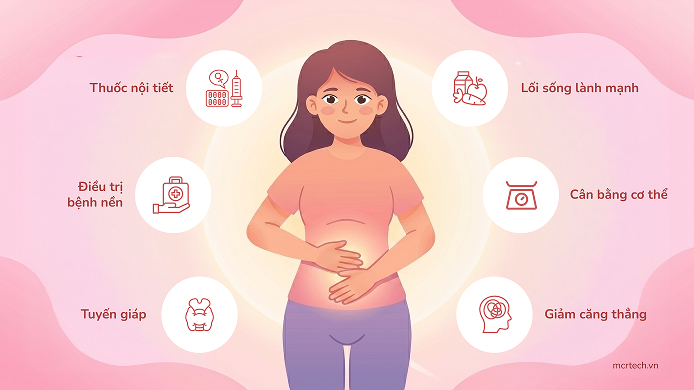
Principles of treatment and management of menstrual disorders based on the underlying cause.
Prevention
Although not all cases of menstrual irregularities can be prevented, maintaining a healthy lifestyle can help reduce the risk. Preventive measures include following a balanced diet, engaging in regular physical activity, managing stress effectively, and monitoring menstrual cycles regularly. Routine gynecological examinations can also help detect abnormalities early and ensure timely treatment, thereby protecting women’s reproductive health.
References:
- Boston Children’s Hospital. (n.d.). Menstrual irregularities. https://www.childrenshospital.org/conditions-treatments/menstrual-irregularities
- Baylor College of Medicine. (n.d.). Menstrual disorders. https://www.bcm.edu/healthcare/specialties/obstetrics-and-gynecology/ob-gyn-conditions/menstrual-disorders