Osteoporosis: A silent disease with a hidden risk
Keywords: Osteoporosis, bone density, fracture risk, calcium, bone metabolism
Overview of osteoporosis
Osteoporosis is a chronic skeletal disorder characterized by decreased bone density and deterioration of bone microarchitecture, leading to increased bone fragility and fracture risk. The condition develops when bone resorption exceeds bone formation, resulting in porous and weakened bones.
Although osteoporosis can affect individuals of all ages and sexes, it is most common in older adults, particularly postmenopausal women due to decreased estrogen levels.
Osteoporosis is often referred to as a “silent disease” because bone loss occurs gradually without symptoms until a fracture occurs. The most commonly affected sites include the hip, spine, and wrist, which are also the locations most associated with morbidity and mortality.
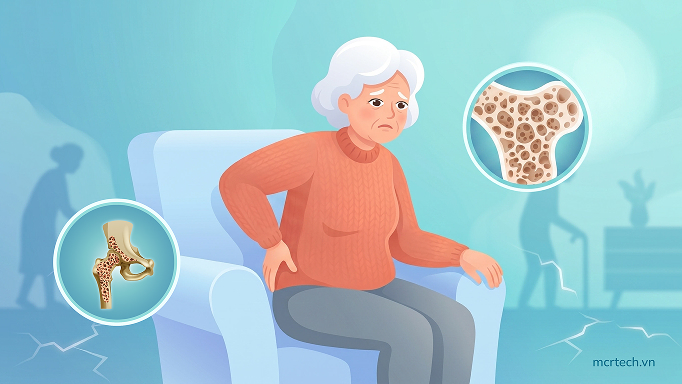
Illustration of osteoporosis and its effects on bone structure.
Pathophysiology and risk factors
Bone is a dynamic tissue that undergoes continuous remodeling through the processes of bone formation and resorption. Osteoporosis occurs when this balance is disrupted, and bone breakdown exceeds bone formation. Aging plays a central role, as bone mass peaks in early adulthood and declines thereafter.
Hormonal changes are a major contributing factor. In particular, reduced estrogen levels in postmenopausal women significantly accelerate bone loss. Similarly, abnormalities in thyroid, parathyroid, and adrenal hormones can also negatively affect bone metabolism.
Non-modifiable risk factors include advanced age, female sex, genetic predisposition, small body frame, and certain ethnic backgrounds (e.g., Caucasian and Asian populations).
Modifiable risk factors include:
- Low calcium intake and vitamin D deficiency
- Sedentary lifestyle
- Smoking and excessive alcohol consumption
- Long-term use of corticosteroids and certain medications
Additionally, underlying medical conditions such as gastrointestinal diseases, rheumatoid arthritis, and endocrine disorders can further increase the risk of osteoporosis.
Clinical manifestations
Osteoporosis is typically asymptomatic in its early stages, which contributes to delayed diagnosis. Most patients remain unaware of the disease until a fracture occurs.
When symptoms do appear, they are usually related to fractures. Common clinical manifestations include:
- Back pain caused by vertebral fractures
- Loss of height over time
- Stooped or kyphotic posture
- Increased susceptibility to fractures, even with minimal trauma
Fractures, particularly of the hip and spine, are the most serious complications. Hip fractures can lead to long-term disability and increased mortality, while vertebral fractures may result in chronic pain and reduced quality of life.
Diagnosis
Osteoporosis is often diagnosed through routine screening or after a fracture has occurred. A key diagnostic tool is the bone mineral density (BMD) test, most commonly performed using dual-energy X-ray absorptiometry (DEXA or DXA scan).
This non-invasive test measures bone density at critical sites such as the hip and spine and helps determine fracture risk. Results are typically expressed as T-scores, which compare a patient’s bone density to that of a healthy young adult.
In addition to imaging, clinicians may assess risk factors, medical history, and use tools such as the FRAX score to estimate the 10-year probability of fractures.
Treatment and management
The management of osteoporosis aims to reduce fracture risk, preserve bone mass, and improve skeletal strength, combining pharmacological therapy with lifestyle interventions.
Non-pharmacological management
Lifestyle modification is the foundation of osteoporosis care. Adequate intake of calcium and vitamin D is essential to support bone health and optimize the effectiveness of pharmacological treatments.
Regular weight-bearing and resistance exercises stimulate bone formation and improve muscle strength and balance, thereby reducing the risk of falls and fractures.
Fall prevention strategies are also critical, particularly in elderly patients. These include home safety modifications, vision correction, and balance training.
Pharmacological therapy
Pharmacological treatment is indicated for individuals with osteoporosis (T-score ≤ −2.5), those with prior fragility fractures, or patients with high fracture risk based on FRAX assessment.
Bisphosphonates (e.g., alendronate, risedronate) are considered first-line therapy. They work by inhibiting osteoclast-mediated bone resorption, thereby stabilizing or increasing bone density.
Denosumab, a monoclonal antibody that inhibits RANKL, reduces bone resorption and is used in patients who cannot tolerate bisphosphonates or have high fracture risk.
Anabolic agents (e.g., teriparatide) stimulate bone formation and are typically reserved for severe osteoporosis or patients with multiple fractures.
Hormone-related therapies, including estrogen replacement therapy, may be considered in selected postmenopausal women but require careful risk–benefit evaluation due to potential cardiovascular and cancer risks.
Monitoring and long-term management
Treatment effectiveness is monitored through periodic BMD assessments (typically every 1–2 years) and evaluation of fracture occurrence.
Adherence to therapy is a major challenge in osteoporosis management, as treatment is often long-term and asymptomatic. Patient education plays a key role in improving compliance.
In some cases, drug holidays may be considered for long-term bisphosphonate users to reduce the risk of rare adverse effects such as atypical femoral fractures or osteonecrosis of the jaw.
Prevention and control
Prevention of osteoporosis focuses on maximizing peak bone mass early in life and minimizing bone loss later.
Adequate calcium intake is essential for bone health, with recommended daily intake increasing with age. Dietary sources include dairy products, leafy greens, and fortified foods.
Vitamin D plays a critical role in calcium absorption and bone metabolism. It can be obtained through sunlight exposure, diet, or supplementation.
Regular weight-bearing and muscle-strengthening exercises help build and maintain bone density, while also improving balance and reducing fall risk.
Other preventive strategies include avoiding tobacco use, limiting alcohol consumption, and implementing fall-prevention measures, especially in older adults.
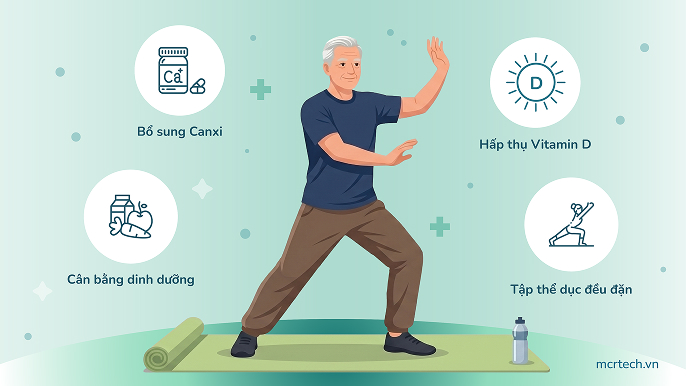
Prevention and management strategies for osteoporosis.
Interesting aspects and medical significance
One of the most notable aspects of osteoporosis is its silent progression. Significant bone loss can occur without any symptoms, making early detection challenging.
Osteoporosis also highlights the importance of preventive medicine, as interventions during youth and early adulthood, such as proper nutrition and physical activity, can significantly influence bone health later in life.
From a clinical perspective, osteoporosis represents a major public health concern due to its association with fractures, disability, and increased mortality, particularly among the elderly population.
References:
- National Institute of Arthritis and Musculoskeletal and Skin Diseases. (2022, December). Osteoporosis. https://www.niams.nih.gov/health-topics/osteoporosis
- Mayo Clinic. (2025, December 17). Osteoporosis. https://www.mayoclinic.org/diseases-conditions/osteoporosis/syc-20351968