Global risk assessment and long-term management strategies for COVID-19
COVID-19 is currently a persistent endemic infectious disease posing a moderate level of risk to global public health. Although the overall severity of the disease has declined, the virus continues to evolve and remains a significant threat to vulnerable populations. Maintaining epidemiological surveillance, strengthening vaccination coverage among high-risk groups, implementing community-based preventive measures, and integrating COVID-19 into long-term respiratory disease management strategies are key elements in mitigating the health and societal impacts of the disease in the post-pandemic period.
Keywords: COVID-19, pandemic, infectious disease, SARS-CoV-2
Overview
COVID-19 is an infectious disease caused by the SARS-CoV-2 virus and has triggered an unprecedented global health crisis in the 21st century. Although the Public Health Emergency of International Concern has been lifted, COVID-19 has not disappeared but has transitioned into a phase of sustained circulation, continuing to affect public health systems as well as socio-economic stability worldwide. In this context, the approach to COVID-19 has shifted from emergency response to long-term risk management, emphasizing epidemiological surveillance, protection of high-risk populations, and the maintenance of effective preventive measures.
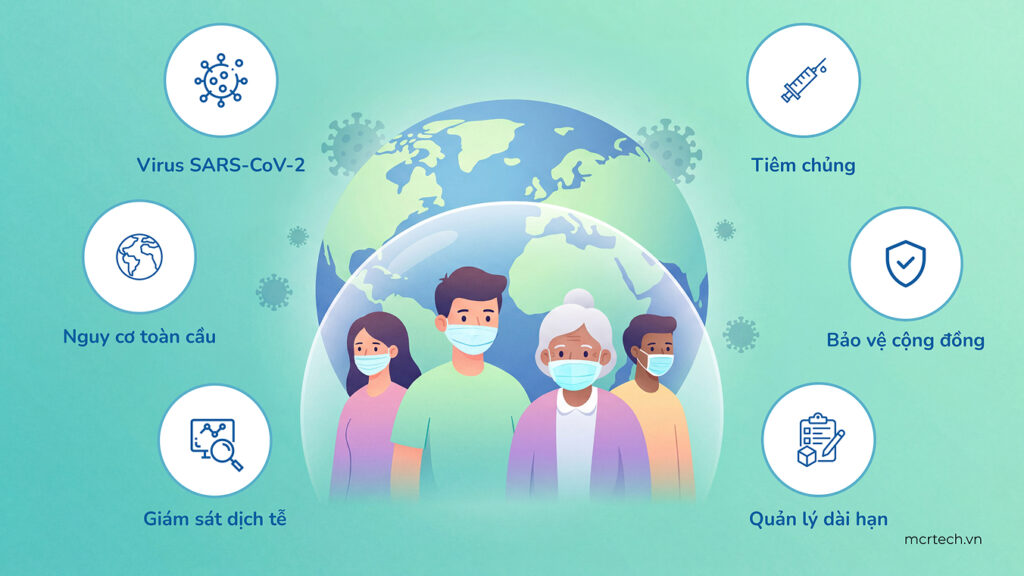
Shifting from emergency response to long-term risk management.
Global risk assessment of COVID-19
Recent global risk assessments indicate that COVID-19 is currently classified as posing a moderate risk to global public health. This risk level reflects a substantial decline in hospitalizations, severe disease, and mortality compared with the peak periods of the pandemic, largely attributable to the development of population immunity through vaccination and natural infection, as well as advances in clinical management. However, SARS-CoV-2 continues to circulate widely and evolve, giving rise to new variants with increased transmissibility and varying degrees of immune escape.
In addition, reduced intensity of epidemiological surveillance and genomic sequencing in many countries – particularly in low- and middle-income regions – limits the capacity for early detection of significant viral changes. Unequal vaccination coverage, especially among high-risk groups such as older adults and individuals with underlying health conditions, further contributes to uncertainty in forecasting future public health risks.
Disease characteristics and clinical manifestations
COVID-19 is primarily transmitted through respiratory droplets and aerosols containing the virus, which are expelled when infected individuals speak, cough, sneeze, or breathe. The average incubation period ranges from 5 to 6 days and may extend up to 14 days. Most infections are mild to moderate, with common symptoms including fever, cough, fatigue, sore throat, headache, and loss of taste or smell.
Nevertheless, a proportion of patients may progress to severe disease, characterized by dyspnea, hypoxemia, diffuse lung injury, and multi-organ failure. The risk of severe illness and death is markedly higher among older adults and individuals with chronic conditions such as cardiovascular disease, diabetes mellitus, chronic respiratory disease, obesity, immunosuppression, and cancer. These observations highlight that, despite an overall reduction in severity, COVID-19 continues to pose a considerable threat to vulnerable populations.
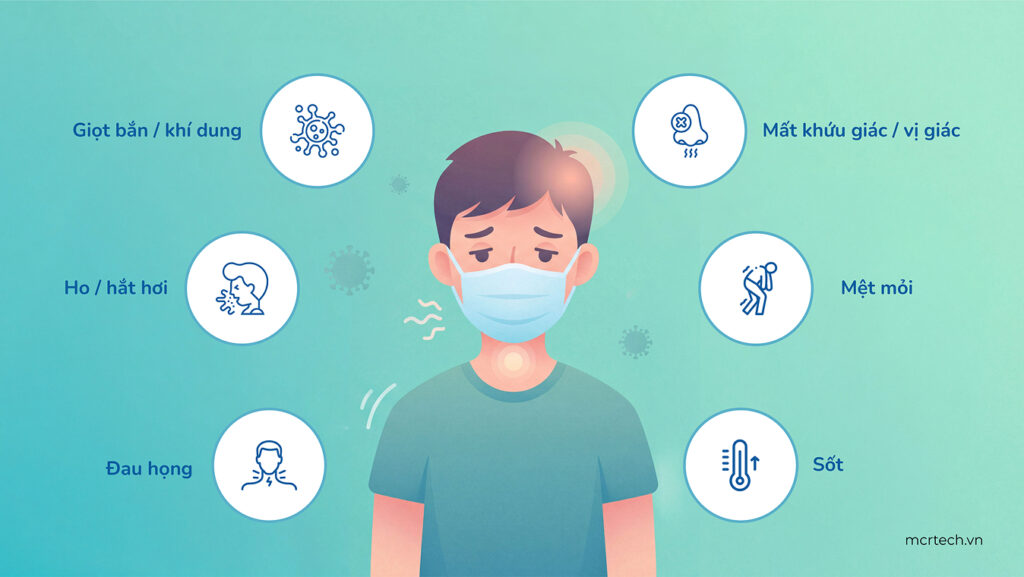
Pathological characteristics and clinical manifestations of the patient.
Preventive measures and the role of the community
During the long-term management phase, individual and community-based preventive measures remain crucial in limiting transmission and reducing healthcare burden. Regular hand hygiene, respiratory etiquette when coughing or sneezing, improved ventilation in indoor spaces, and the use of face masks in high-risk settings contribute to lowering the risk of respiratory transmission. Sustaining these practices not only supports COVID-19 control but also provides broader benefits in preventing other respiratory infectious diseases.
Furthermore, enhancing public awareness regarding self-monitoring of symptoms, minimizing contact when experiencing suspected symptoms, and seeking timely medical care plays a critical role in early identification of severe cases and in reducing complications.
The role of vaccination in long-term management strategies
Vaccination remains the cornerstone of COVID-19 prevention, particularly in reducing the risk of severe disease, hospitalization, and mortality. As the virus continues to circulate, vaccination programs should prioritize protection of high-risk populations and ensure equitable access to vaccines. Updating vaccines to match circulating variants, in combination with other public health interventions, helps alleviate pressure on healthcare systems and mitigates the impact of seasonal surges in cases.
At the same time, COVID-19 is increasingly being integrated into surveillance systems for respiratory infectious diseases, enabling countries to transition from emergency response models to sustainable, flexible, and risk-based management approaches.
References:
- World Health Organization. (2026, February 3). COVID-19 Global Risk Assessment – Version 9.
https://www.who.int/publications/m/item/covid-19-global-risk-assessment–version-9 - World Health Organization. (n.d.). Coronavirus disease (COVID-19).
https://www.who.int/health-topics/coronavirus#tab=tab_3 - World Health Organization. (n.d.). Advice for the public on COVID-19.
https://www.who.int/emergencies/diseases/novel-coronavirus-2019/advice-for-public