Sinusitis: When nasal congestion is more than just a common cold
Keywords: Sinusitis, nasal congestion, nasal mucosa inflammation, nasal disease
What is sinusitis?
Sinusitis is the inflammation or swelling of the mucous membrane lining the inside of the paranasal sinuses. The sinuses are air-filled cavities located behind the forehead, cheeks, eyes, and the bridge of the nose. Normally, the sinuses produce a small amount of mucus to moisten and cleanse the respiratory tract. This mucus drains out through small openings that connect to the nasal cavity.
When the mucous membrane becomes inflamed, the drainage openings become blocked, causing mucus to accumulate inside the sinuses. This creates an environment where viruses, bacteria, or fungi can grow, leading to sinusitis. Sinusitis is one of the most common respiratory conditions and can affect people of all ages.
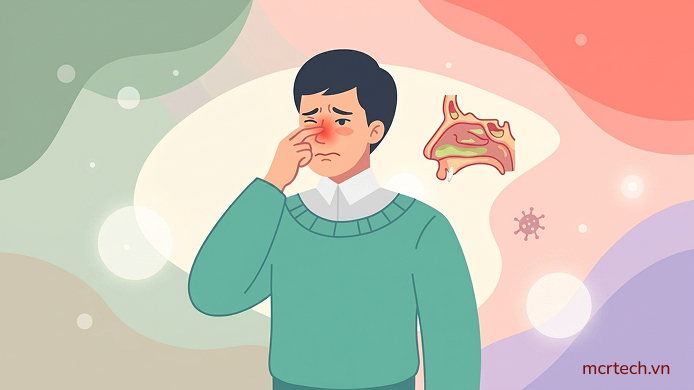
Illustration of sinus mucosal inflammation and impaired sinus drainage.
Classification of sinusitis
Acute sinusitis
Acute sinusitis typically lasts less than 4 weeks and is most often associated with viral infections following a cold or flu. This is the most common form, and many cases resolve on their own without antibiotics. Patients usually experience sudden symptoms such as nasal congestion, runny nose, headache, and facial pain or pressure.
Subacute sinusitis
Subacute sinusitis lasts between 4–12 weeks. Symptoms may lessen but do not completely disappear.
Chronic sinusitis
Chronic sinusitis is a condition where symptoms persist for more than 12 weeks despite treatment. Unlike acute sinusitis, which is primarily linked to infection, chronic sinusitis is often associated with prolonged inflammation, allergies, nasal polyps, or structural abnormalities of the nasal passages. Patients may experience persistent nasal congestion, head heaviness, reduced sense of smell, fatigue, or continuous facial pressure. This condition significantly affects quality of life, causing difficulty sleeping, reduced concentration, and prolonged discomfort.
Causes of sinusitis
Viral infection
The majority of sinusitis cases begin with a viral respiratory infection such as a cold or flu. When the nasal mucosa swells, the sinus drainage openings become blocked, causing mucus to build up inside.
Bacterial infection
If mucus remains trapped for too long, bacteria can grow in the sinuses and cause a secondary infection. Bacterial sinusitis is often suspected when symptoms last longer than 10 days, there is a high fever, severe facial pain, or when the condition worsens after initial improvement.
Allergies and environmental factors
Allergies are a common cause of prolonged nasal mucosa inflammation. In addition, factors such as cigarette smoke, air pollution, dust, chemical irritants, or cold, dry air can increase the risk of sinusitis.
Structural abnormalities of the nose
Some people have a deviated nasal septum, nasal polyps, or narrowed sinus drainage pathways, which make it difficult for mucus to drain and lead to recurrent inflammation.
Symptoms of sinusitis
The symptoms of sinusitis are often quite similar to those of a common cold, but they last longer and involve more pronounced facial pressure.
Common symptoms include: nasal congestion, runny nose, yellow or green nasal discharge, headache, pain around the eyes, cheeks, or forehead, a feeling of facial heaviness, reduced sense of smell, cough, sore throat, bad breath, and fatigue.
Some people also experience pain in the upper teeth because the maxillary sinuses are located close to the tooth roots. Notably, the pain often worsens when bending forward due to changes in sinus pressure.

Common clinical manifestations of sinusitis.
How is sinusitis diagnosed?
Doctors typically diagnose sinusitis based on symptoms, the duration of the illness, and a physical examination of the nose and throat. In some cases, patients may need nasal endoscopy, a sinus CT scan, allergy testing, or mucus sample collection.
CT scans are particularly useful in cases of suspected chronic sinusitis or complications.
Treatment of sinusitis
Symptom relief
The majority of acute sinusitis cases improve with supportive measures such as rest, drinking enough water, saline nasal irrigation, pain relievers, and steroid nasal sprays.
Saline nasal irrigation helps cleanse mucus and supports open sinus drainage pathways.
Antibiotics
Not every case of sinusitis requires antibiotics. Since most cases are caused by viruses, antibiotics will not be effective. Antibiotics are typically only considered when a bacterial infection is suspected.
Surgery
In cases such as chronic sinusitis, nasal polyps, or structural abnormalities, patients may need surgical intervention to improve sinus drainage.
When to see a doctor
Patients should see a doctor if symptoms last longer than 10 days, there is severe facial pain, high fever, swelling around the eyes, blurred vision, or severe headache. Although rare, sinus infections can sometimes spread to the eyes or brain and cause dangerous complications.
Why is sinusitis becoming more common?
Air pollution, smoke and dust, allergies, and enclosed air-conditioned environments are making respiratory conditions increasingly common. At the same time, frequent exposure to respiratory viruses also increases the risk of developing sinusitis after colds or flu.
What is notable is that many people overlook persistent nasal congestion or dull headaches, not realizing that inflammation has been present inside their sinuses for weeks or months.
And sometimes, that feeling of “not being able to breathe fully through your nose” is not just temporary discomfort but may be a sign that your sinuses are chronically inflamed and blocked deep inside your body.
References:
- Cleveland Clinic. (2023, September 3). Sinus Infection (Sinusitis). https://my.clevelandclinic.org/health/diseases/17701-sinusitis
- HealthDirect (n.d). Sinusitis (rhinosinusitis). https://www.healthdirect.gov.au/sinusitis